


















Qingmei Future Insights
Midjourney and Stable Diffusion in Advertising
Midjourney and Stable Diffusion in Advertising
Midjourney and Stable Diffusion in Advertising Design: Tools in Practice
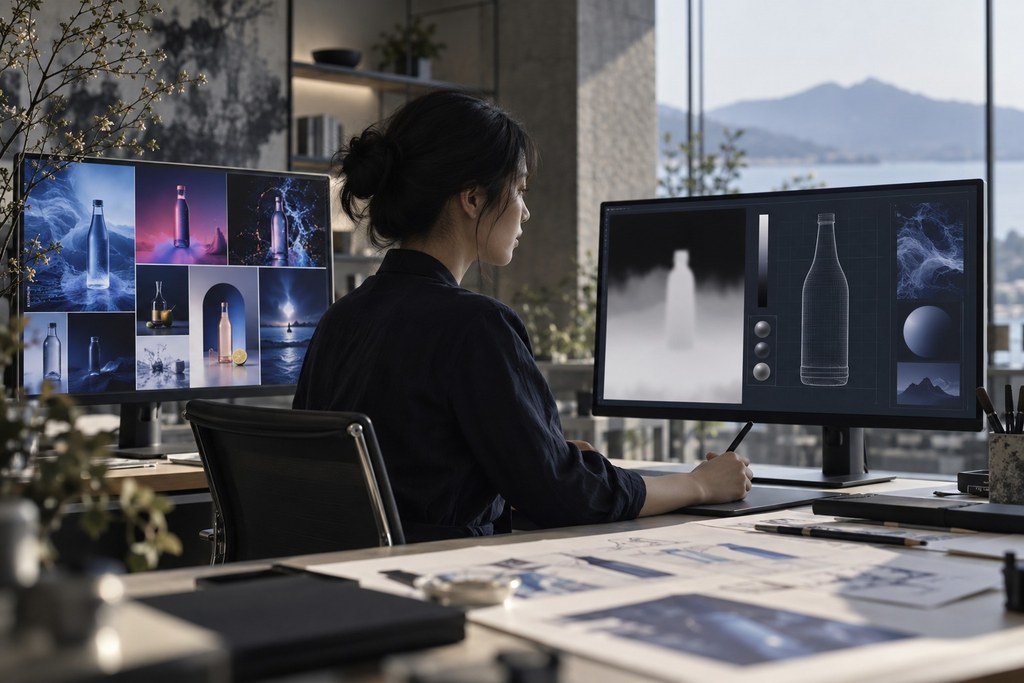
Generative visual models are reshaping the creative production chain in advertising. They don't replace designers. They raise both the speed and the range of exploration across brainstorming, sketching, compositing, and finalizing. Their core value: low-cost exploration of many directions, fast style transfer, detail-level control, and high-resolution output, helping teams deliver better visuals in less time.
Tool Positioning and Selection
· Midjourney( MJ)
Strengths: strong aesthetics, mature composition and lighting, easy to learn, fast iteration. Best for: generating ideas, refining visual direction, exploring poster art styles. Limitations: less controllable (harder to precisely reproduce product details or brand guidelines); closed-source model.
. Stable Diffusion(SD)
Midjourney and Stable Diffusion for advertising. Strengths: local or private deployment, a rich plugin ecosystem (ControlNet, LoRA, IP-Adapter), pixel-level editing, and strong control. Best for: brand consistency, complex compositing, high-volume output, multi-format adaptation, and compliance control. Limitations: a steeper learning curve, requiring deeper knowledge of parameters and post-production workflows.
Recommended combination: use MJ to explore directions and set the style, use SD to deliver precise product and brand consistency, then finish layout, typography, and motion in PS/AE.
Standard Workflow (Brief to Delivery)
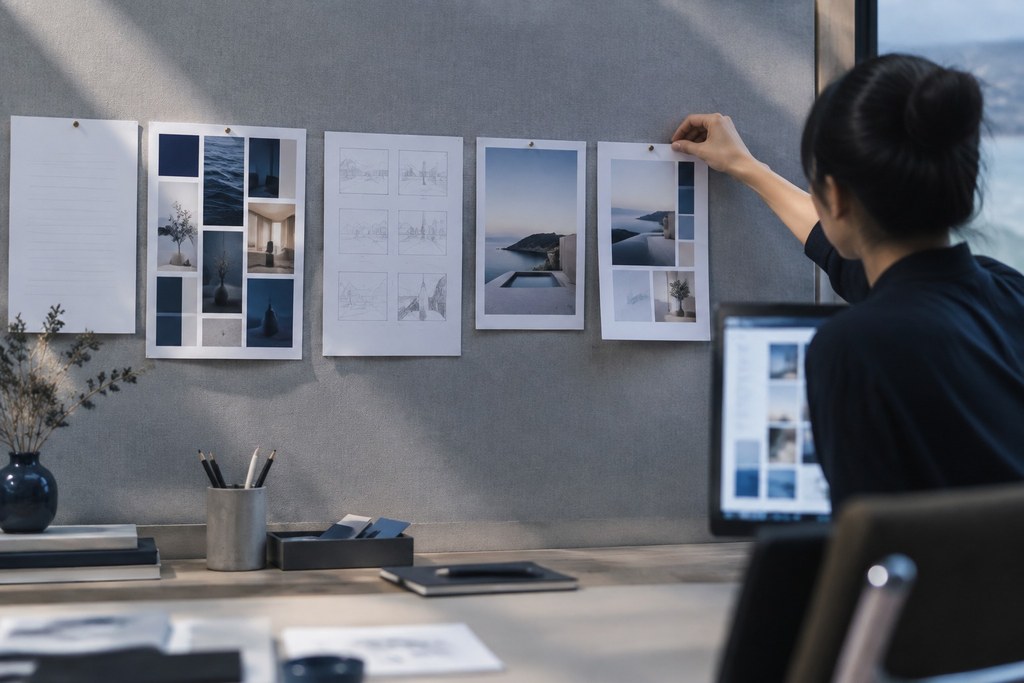
. Brief analysis and visual anchors: break out audience, key benefits, scenarios, brand personality and non-negotiable compliance items (logo distortion, color restrictions, prohibited elements).
. Rapid mood board: gather competitor references, past brand work, palettes and material libraries, and define clearly what should not appear.
. Text-to-image drafts: use MJ to explore direction with 5–10 prompts in different styles, then shortlist 2–3. Use SD to control form and objects, with prepared references (multi-angle product shots, C4D/KeyShot packaging renders, pose line art).
. Structure and consistency control:
MJ: reference images with weights, the same seed, and --stylize and --chaos to control divergence. SD: ControlNet (depth/lineart/openpose/reference), LoRA (brand style/character/face), and IP-Adapter to keep identity consistent.
. Refinement and retouching: inpainting for spots, flaws and materials; outpainting to extend the canvas; high-resolution models or post-upscaling to print resolution.
. Brand and layout: apply typography, logo, color and layout grids in PS/AI; export specs for every channel.
. Review and A/B testing: define metrics (recognition, memorability, distracting elements, conversion focus) and run quick low-traffic comparisons.
Practical points and parameter paradigms
Writing Prompts (Chinese + Modifiers)
. Structure template: "Target audience + product/scene + mood and style + lighting and lens + materials and details + composition and ratio + output requirements"
. Midjourney Example
"Futuristic poster for a new Gen Z beverage, neon cyberpunk, high-contrast lighting, liquid splash focused on the bottle, clean background with space for copy, commercial photography quality, --ar 4:5 --stylize 250 --chaos 10 --seed 1234"
. Stable Diffusion Example (Positive/Negative)
Positive: "premium beverage bottle on acrylic pedestal, neon rim light, liquid splash, clean background, commercial photography, high clarity, product focus, room for copyˮ
Reverse: "low-res, blur, extra fingers, deformed, watermark, overexposed, textˮ
Midjourney Tips
. Place reference images before the prompt to control how much they influence style; use the same seed to keep a series consistent. Use Vary and Zoom to refine composition and extend the canvas while keeping the main elements intact. Lower --chaos for more reproducible results; raise --stylize for more artistic textures and lighting.
Stable Diffusion Settings
. Resolution: 1024×1280 or higher for first drafts; for print, use a high-resolution upscaling chain (e.g., ESRGAN or 4x-UltraSharp).
. Sampler: DPM++ SDE Karras or DPM++ 2M Karras; Steps 25-40; CFG 5-7 Balanced Realism/Stable.
. ControlNet: depth preserves volumetric light and structure; lineart keeps line work precise; openpose controls human pose; reference/IP-Adapter locks style or faces.
. LoRA: fine-tunes brand style, character makeup and materials. Weights of 0.6–0.9 are the most stable.
. Inpainting: masks to fix hands, text and logo transitions. Outpainting extends to landscape or portrait formats.
Brand Consistency and Reusable Assets
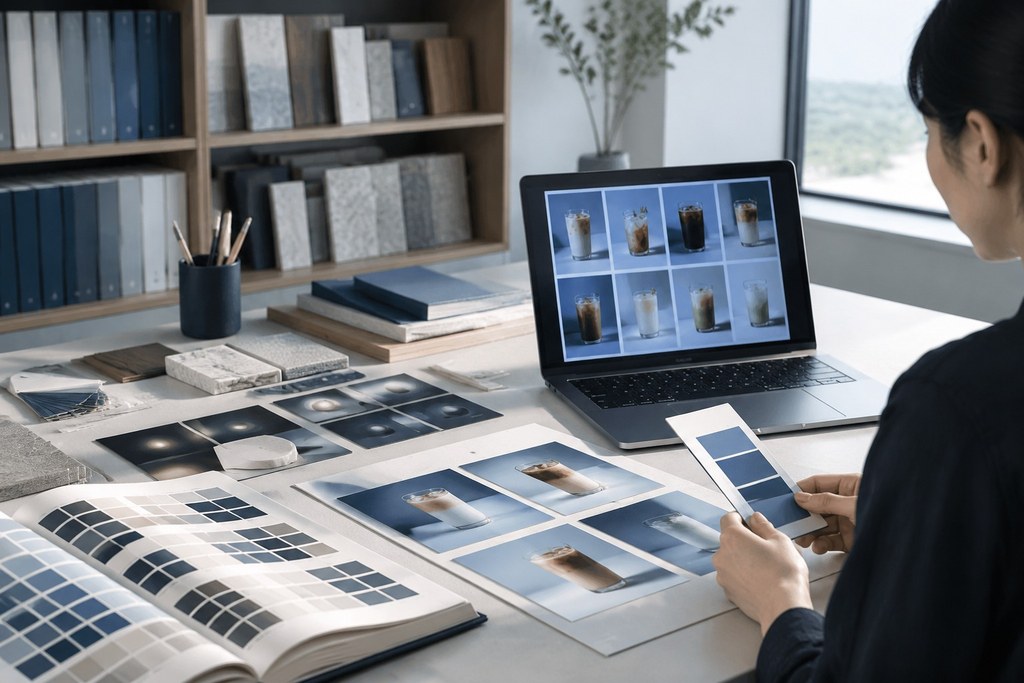
Build a style lexicon: brand colors, lighting ratios, material terms, camera language, and banned words. Version seeds and parameters: record the prompt, seed, model version, and LoRA weights for every concept so it can be reproduced. Train private LoRAs: use your own landing pages, past key visuals, and product renders for few-shot training to build lasting style assets. Keep characters consistent: use IP-Adapter or FaceID LoRA to lock faces and avoid a face-swapped look.
Compliance and Ethics
Copyright and commercial use: Review the commercial terms of every model and plugin; avoid LoRAs that replicate infringing styles or protected IP. Likeness rights: Real spokespeople require explicit authorization; photorealistic faces must not resemble identifiable real individuals. Trademarks and brand elements: Logos must be applied as vectors in post-production, never "drawn" by AI, to prevent distortion. Data security: Use local Stable Diffusion for confidential packaging and unreleased products; anonymize carefully before any cloud transfer.
Output and platemaking specifications
. Digital ads: sRGB, 72–150 dpi. Export multiple ratios for each platform (1:1/4:5/9:16/16:9) and leave a safe area for copy.
. Print: CMYK, or refine in RGB and convert professionally; 300 dpi; 3–5 mm bleed. Metallic, matte and other finishes require additional channels.
. Multi-format delivery: use SD control plus in/outpainting to generate landscape and portrait versions quickly and cut rework.
cost and efficiency
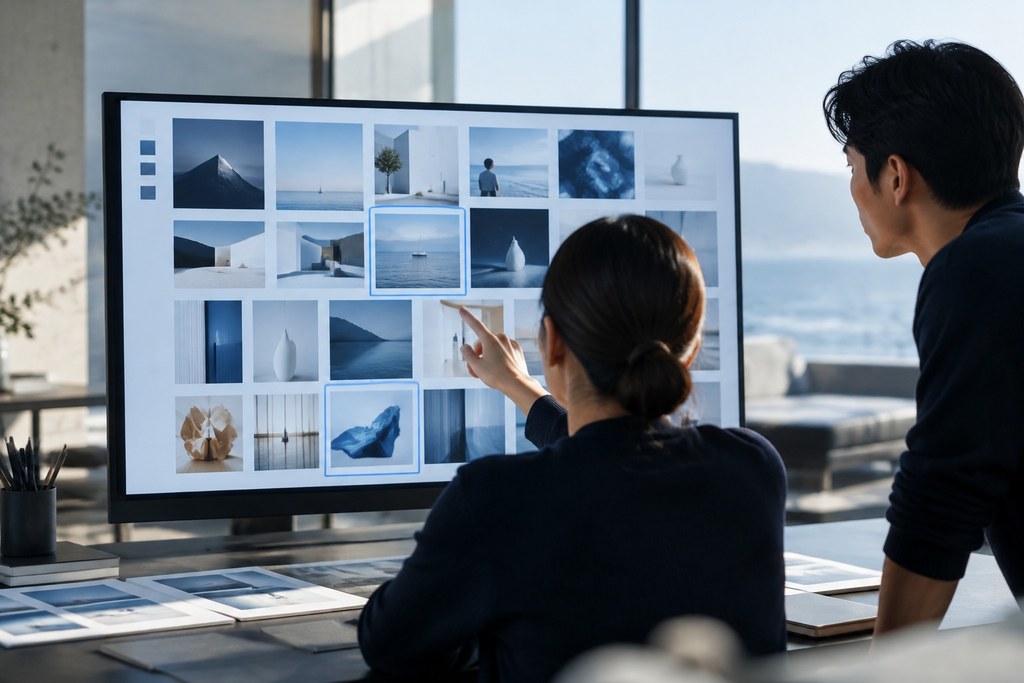
Brainstorming speed: from days to hours; screening 10+ directions in parallel is now routine. Output consistency: MJ is fast but less controllable; SD is slower but can lock in detail and consistency. Team roles: prompt engineering, model control, visual direction, and layout and compositing form a pipeline.
Common pitfalls and avoidance
· Errors in hands or lettering: fix with inpainting and vector correction in post; add text in post whenever possible.
. Physical inconsistencies: use depth/normal control to keep volume and light direction consistent.
. Over-stylization hiding key benefits: add "product focus/clean background/room for copy" to the prompt and lower stylization parameters.
. Results not reproducible: fix the seed and record model and plugin versions; reduce randomness parameters.
Summary
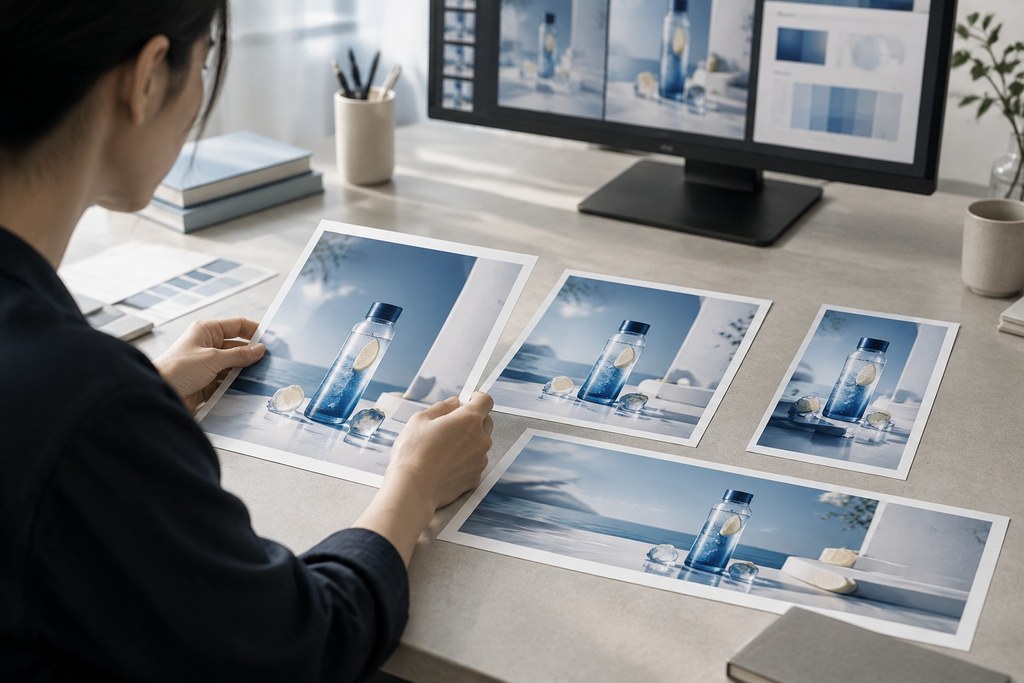
Use MJ as a visual searchlight and SD as a CNC machine: the first finds direction quickly, the second executes with precision. Paired with rigorous brand guidelines and post-production, generative AI can make advertising creative fast, accurate, and stable, increasing the density of ideas while safeguarding delivery quality. By continually building prompt libraries, private LoRAs, and parameter templates, a team's productivity compounds over time.