


















Qingmei Future Insights
Zero-Waste Brands: AI-Enabled Life Cycle Assessment at Global Scale
Zero-Waste Brands: AI-Enabled Life Cycle Assessment at Global Scale
As the global environmental crisis deepens, zero waste has evolved from an environmentalist ideal into a core strategy for sustainable business. With rapid advances in AI, Life Cycle Assessment (LCA) is undergoing a profound technological shift, giving zero-waste brands a new scientific foundation and a clear path to global expansion. AI not only makes LCA far more accurate and efficient. More importantly, it makes complex environmental impact assessment real-time, scalable, and tailored, giving brands robust technical support for reaching true zero waste worldwide. This fusion of technology and principle is redefining the boundaries and possibilities of sustainable business.
Strategic restructuring of the zero-waste concept
The evolution of zero waste reflects a deeper understanding of environmental protection and a fundamental shift in business models. The traditional linear model of "take-make-dispose" is giving way to the circular model of "reuse-remanufacture-recycle." In this shift, zero waste is no longer an end-of-pipe solution for waste disposal, but a systemic strategy that begins at the product design stage.
The core of the modern zero-waste brand is a new logic for value creation. Traditional brands create value by selling products. Zero-waste brands create value by maximizing resource use and circulation. This shift requires brands to move from manufacturing products to managing resources and advancing the circular economy. A fundamental change in design thinking is the prerequisite for zero waste. Cradle-to-cradle design
thinking requires every product to account for the environmental impact of its entire life cycle at the design stage, ensuring it can fully return to natural or technical cycles at the end of its useful life. This shift in design thinking requires cross-disciplinary knowledge and systematic, innovative thinking.
Business model innovation is key to putting zero waste into practice. Emerging models such as product-as-a-service, the sharing economy, and leasing offer viable paths to zero waste. They reduce waste by extending product lifecycles and using resources more efficiently.
Rebuilding the supply chain is a challenge every zero-waste brand must face. Traditional linear supply chains must be redesigned as circular ones, with effective reverse logistics systems that enable materials to be recovered
How AI Is Transforming LCA

AI is transforming both the methods and the efficiency of environmental impact assessment in life cycle assessment (LCA). Traditional LCA relies on extensive manual data collection and analysis. It is slow, costly, and poorly suited to a fast-changing business environment. AI makes LCA automated, real-time, and intelligent.
Machine learning's strength in data processing and pattern recognition gives LCA new tools. By analyzing vast amounts of environmental, production, and consumption data, AI can identify the factors that most affect the environment and uncover opportunities to improve. This analysis goes far beyond the scope and precision of manual work.
Deep learning's strength in modeling complex systems gives LCA more precise assessment models. Traditional LCA models often rely on simplified assumptions and limited data. Deep learning can handle more variables and more complex relationships, producing more realistic and accurate models of environmental impact.
Natural language processing enables AI to extract valuable environmental information from unstructured text. Corporate reports, government documents, academic research, news coverage and other text sources can all feed LCA, greatly expanding the scope and efficiency of data collection.
Computer vision allows AI to assess environmental conditions through image and video analysis. Satellite image analysis can track changes in land use, forest cover, and pollution emissions, providing direct, timely environmental data for LCA.
Stronger predictive analytics let LCA go beyond assessing current environmental impact to forecasting future trends. This foresight is valuable for long-term sustainability planning and risk management.
Real-time monitoring and dynamic optimization system

AI-powered real-time monitoring gives zero-waste brands unprecedented control over environmental management. Traditional environmental monitoring is periodic and static, making it hard to detect and respond to issues in time. AI makes continuous, 24/7 real-time monitoring possible.
IoT sensor networks provide the infrastructure for real-time data collection. Sensors monitor air quality, water quality, soil contamination, noise levels, and other environmental indicators, streaming data to AI analytics systems in real time.
Edge computing processes data close to its source, reducing transmission latency and cost while improving system responsiveness and reliability.
Early-warning systems use AI-driven predictive analysis to flag environmental issues before they occur, giving companies and regulators time to respond. This capability is key to preventing environmental incidents and reducing harm.
Adaptive optimization algorithms automatically adjust production parameters and operating strategies based on real-time monitoring data, minimizing environmental impact as conditions change. This adaptability lets zero-waste brands maintain optimal environmental performance in a shifting environment.
A closed feedback loop ensures monitoring data effectively guides decisions and action. From collection to analysis, warning to response, and action to evaluation, it forms a complete closed-loop management system.
Global data integration and standardization

Scaling a zero-waste brand globally requires unified data standards and assessment frameworks. Countries and regions differ in environmental regulations, data standards, and units of measurement, which complicates global LCA. AI provides effective tools to address these challenges.
Automated data standardization converts data from different sources and formats into a unified standard. Machine learning can detect and reconcile format differences, enabling seamless integration across data sources. Multilingual processing allows AI systems to handle environmental data and regulatory information in many languages, and advances in natural language processing make cross-language extraction and analysis possible.
Culturally adaptive algorithms account for differences in environmental values and behavior across cultures. The same environmental impact may be judged differently in different cultural contexts, and AI systems need to handle that variation.
Automated compliance checks help zero-waste brands ensure their operations meet local environmental regulations in every country and region. AI systems can track regulatory changes in real time and assess compliance risk.
A global benchmark database gives LCA in every region a common reference standard. It holds key data on environmental impact factors, materials, and energy from around the world.
AI-driven supply chain transparency

Supply chain complexity is one of the main challenges facing zero-waste brands. Modern global supply chains often involve hundreds of suppliers across many countries and regions, making full transparency and control difficult with traditional management methods. AI offers effective tools for making supply chains more transparent.
Combining blockchain and AI gives supply chains a tamper-proof record. Each product's raw material sources, production process, shipping route, and environmental impact are recorded on the blockchain, forming a complete digital history.
Automated systems can assess suppliers' environmental performance in real time using data from multiple sources, including official environmental monitoring data, satellite imagery analysis, news reports, and social media. Risk-alert systems can identify environmental risk points across the supply chain, such as high-pollution suppliers, environmentally sensitive regions, and policy risks. This early warning helps brands act ahead of time and avoid environmental risk.
AI-powered alternative supplier recommendations help brands identify more sustainable suppliers. The system weighs multiple factors, including environmental performance, cost-effectiveness, and supply capacity.
Supply chain optimization algorithms reduce cost and improve efficiency while meeting environmental targets. They account for multiple environmental factors, including transport distance, carbon emissions, waste generation, and resource consumption.
Intelligent Analysis of Consumer Behavior
Understanding and guiding consumer behavior is key to a zero-waste brand's success. AI provides powerful tools for analyzing consumer behavior in depth, forecasting market trends, and designing effective behavioral interventions.
Quantifying environmental awareness helps brands understand the attitudes and behaviors of different consumer groups. By analyzing search behavior, purchase history, and social media activity, AI can build detailed sustainability profiles of consumers.
A personalized sustainability advice system offers tailored recommendations based on each person's consumption habits and environmental impact. Because the advice is practical and fits individual lifestyles, it's easier to accept and act on.
Behavior change prediction models forecast how different interventions will affect consumer behavior. This helps brands design more effective strategies to encourage sustainable choices.
Social influence network analysis identifies the opinion leaders and network nodes that play a key role in spreading eco-friendly behavior. By engaging these key nodes, brands can promote sustainable ideas and actions more effectively.
Gamified incentives apply behavioral economics and AI algorithms to make rewards for sustainable behavior engaging and effective. They help consumers take part in environmental initiatives more willingly and more consistently.
The Technology Behind the Circular Economy
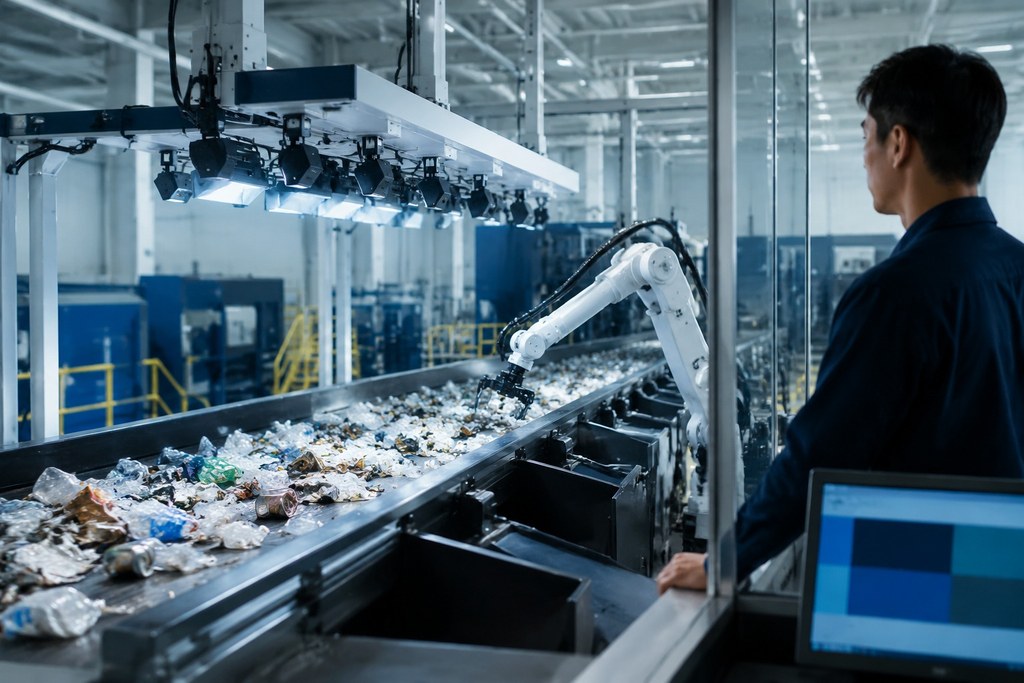
A circular economy depends on a complex technology foundation, with AI at its core. From product design to recovery and reuse, AI runs through the entire circular value chain.
Intelligent design assistants account for circularity from the design stage. Drawing on material databases, environmental impact models, and recycling technology data, the system gives designers optimization suggestions so products are built for circularity from the start.
Material flow tracking systems use IoT and AI to follow materials through the entire economy in real time. This visibility helps pinpoint where materials are lost and improves how efficiently they are used.
Intelligent sorting systems use computer vision and machine learning to identify and sort recyclables automatically. Automation significantly improves recycling efficiency and quality while lowering costs.
A remanufacturing optimization system uses AI to refine the remanufacturing process, improving both the quality of remanufactured products and the efficiency of production. It adjusts process parameters automatically based on the condition of incoming materials.
Demand forecasting systems predict market demand for recycled materials and remanufactured products, guiding the circular economy as it scales. This foresight helps balance supply and demand and supports healthy growth.
Intelligent adaptation of policies and regulations

Environmental regulations vary widely and change often. Zero-waste brands must stay compliant and competitive across many policy environments. AI makes it possible to adapt to regulations intelligently.
Regulatory monitoring systems track changes in environmental regulations worldwide in real time, including new laws, revisions to existing ones, and adjustments to enforcement standards. This helps brands stay current with policy changes.
A compliance assessment system automatically evaluates a company's operational compliance and identifies potential risks. It accounts for regulatory differences across countries and regions and provides targeted recommendations.
Policy impact models assess how policy changes may affect operations, including cost, market, and technology impacts, helping companies plan responses in advance.
Best-practice recommendation systems draw on case studies from around the world to give companies reference approaches for policy adaptation. The system recommends the practices best suited to each company's specific situation.
Policy advocacy support systems analyze policymaking trends and drivers, giving companies data and strategic guidance for advocacy. This helps them engage more effectively in the policymaking process.
Investment return and risk assessment

Investment decisions for zero-waste brands must weigh economic, environmental, and social factors. AI provides rigorous tools for comprehensive return and risk assessment.
A multidimensional value assessment model considers not only financial returns but also environmental benefits, social impact, and brand value. This holistic assessment gives investment decisions a more complete picture.
Risk identification and quantification systems map the risks facing zero-waste investments, including technology, market, policy, and environmental risk. They quantify both the probability and the impact of each.
Scenario analysis and stress testing show how zero-waste investments perform under different conditions, helping investors understand returns and risk across a range of possible outcomes.
Portfolio optimization algorithms balance investment return and risk while accounting for environmental goals. This ensures zero-waste investments meet environmental targets and still deliver reasonable financial returns.
The dynamic adjustment mechanism dynamically adjusts investment strategies based on actual performance and changes in the external environment. This mechanism ensures that investment strategies can adapt to changing environmental and market conditions.
Technological innovation and expansion paths

Technical innovation in zero-waste brands requires sustained R&D investment and progress. AI not only supports today's zero-waste practices but also points the way for future innovation and growth.
The AI-assisted system for new material development provides guidance for the development of new materials by analyzing material performance data and environmental impact data. The system can predict the performance and environmental impact of new materials.
Intelligent process optimization continually improves zero-waste technologies, raising efficiency, lowering costs, and reducing environmental impact. Machine learning algorithms can uncover optimization opportunities in large volumes of process data.
Technology transfer and diffusion mechanisms help zero-waste technologies spread worldwide. AI systems can identify opportunities and barriers for transfer and design effective transfer strategies.
An open-source innovation platform brings together global resources to advance collaborative zero-waste innovation. The platform uses AI to match needs with resources and foster partnerships.
Future technology forecasting systems analyze how technology is evolving and identify emerging technologies likely to have a major impact on zero waste. This foresight helps companies position themselves early for what comes next.
Global collaboration and knowledge sharing

Achieving zero-waste goals requires global collaboration and knowledge sharing. AI provides effective platforms and tools for this collaboration.
A global data-sharing platform brings together environmental data, technical data, and best-practice cases from around the world to support zero-waste work everywhere. AI keeps the data accurate and secure.
An international project management system supports cross-border zero-waste initiatives, with tools for project management, coordination, and sharing results. AI helps make project execution more efficient.
A knowledge graph organizes and connects the body of knowledge on zero waste, giving researchers, practitioners, and policymakers a complete knowledge service. It can also reveal links and gaps between areas of knowledge.
A multilingual AI translation system removes language barriers, enabling knowledge exchange and technology sharing worldwide. It is optimized for specialized terminology in environmental and technical fields.
A cultural adaptation guidance system helps zero-waste practices fit different cultural settings, offering culturally sensitive recommendations. This guidance makes global expansion effective and widely accepted.
Zero-waste brands achieve global scalability through AI-driven life cycle assessment, pointing toward the future of sustainability. This fusion of technology and principle gives environmental protection powerful tools and charts a path for fundamentally rethinking business models. As AI advances and zero-waste thinking spreads, there is good reason to believe a truly sustainable business ecosystem is taking shape, one that will contribute meaningfully to sustainable development. Successful zero-waste brands will be more than commercial winners; they will be a force for global sustainability.