


















Qingmei Future Insights
Differentiation Through AI-Driven Visual Prototyping: A Strategic Guide for Global Brands
In an increasingly homogenized global marketplace, visual differentiation has become the key to standing out. AI is revolutionizing how visual prototypes are created, from generative design to intelligent optimization and from style transfer to personalization, opening up unprecedented possibilities for brand innovation. AI not only accelerates design iteration but also uses data analysis to uncover the visual language that truly resonates with target audiences.
The Intelligent Transformation of Visual Prototyping

AI is fundamentally changing how visual prototypes are created and iterated. Traditional design processes rely on designers' experience and intuition, whereas AI-driven prototyping systems can use deep learning to analyze millions of design cases and identify the underlying patterns of successful visual languages. This intelligence is not meant to replace human creativity; rather, it frees designers from repetitive work so they can focus on higher-level strategic thinking and creative breakthroughs.
Breakthroughs in generative AI have expanded the exploration space of visual prototyping exponentially. Through parametric design and algorithmic generation, brands can produce thousands of design variations in a short time, pushing into creative territory that traditional methods rarely reach. This large-scale exploration is not blind permutation; it is intelligent generation grounded in brand DNA, market insight, and user preference.
Real-time feedback loops accelerate prototype refinement. AI systems can instantly collect and analyze data on how users respond to visual prototypes, across dimensions such as eye-tracking, emotional response, and click behavior. This real-time feedback shifts design decisions from subjective judgment to data-driven evidence, greatly improving how well prototypes fit the market.
Cross-modal learning enables AI to understand how visuals relate to other sensory experiences. By analyzing multimodal data such as images, text, and sound, AI can create brand experience prototypes that are richer and more coherent. This cross-modal understanding is essential to building a complete brand identity system.
Algorithmic Reinvention of Differentiation Strategy

Automated, in-depth competitor analysis is changing how differentiation strategies are formed. AI can monitor and analyze the visual evolution of competing brands worldwide in real time, identifying white space and opportunities for differentiation. This analysis goes beyond surface-level visual comparison to the structural level of design language, uncovering the logic behind different visual strategies.
Uniqueness algorithms ensure that a brand's visuals stand apart. By establishing a visual distinctiveness scoring system, AI can quantify how differentiated a design is, helping brands avoid the trap of sameness. The system considers multiple dimensions, including color combinations, formal language, typographic style, and motion design, to ensure the brand is recognizable at every level.
AI offers a better way to strike a dynamic balance between cultural adaptation and global consistency. The system can identify visual preferences and taboos across cultural contexts, making localized refinements while preserving the brand's core visual DNA. This balance is not a static compromise but a dynamic optimization driven by real-time data.
Predictive differentiation lets brands stay ahead of market trends. By analyzing historical data and current signals, AI can forecast emerging visual trends and help brands position their differentiation strategy early. This foresight is not about following fashion; it is about understanding how trends evolve and creating visual languages that lead.
Intelligent Coordination for Global Deployment
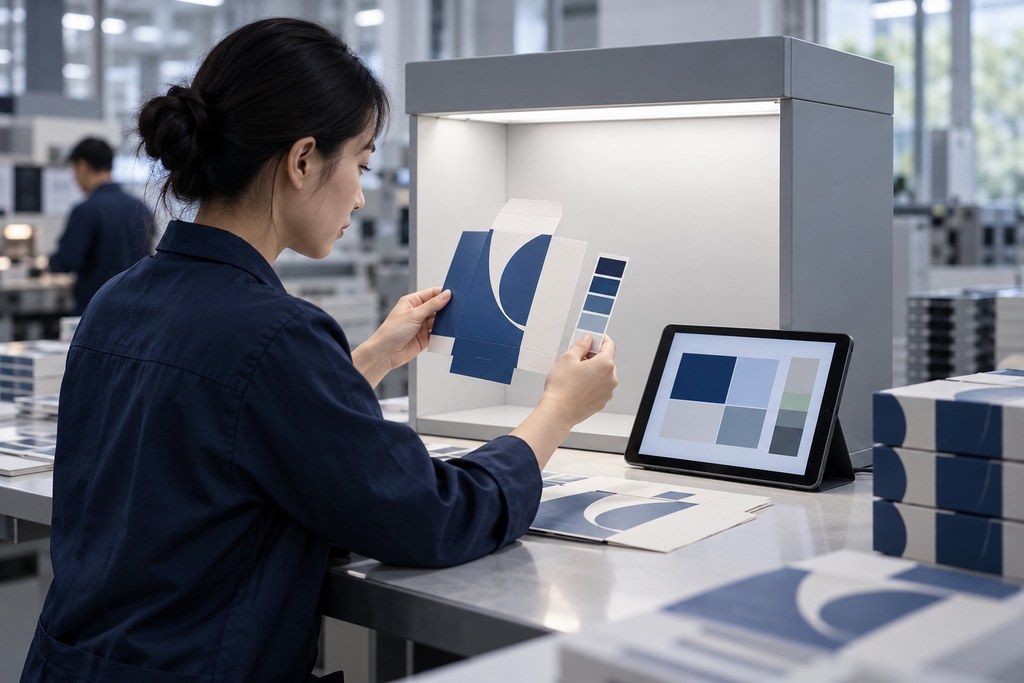
Distributed creative networks break through geographic limits. AI platforms enable design teams across regions to co-create on a shared visual prototype foundation. The system automatically manages version control, maintains design consistency, and coordinates workflows across teams, dramatically improving the efficiency of global rollout.
Adaptive visual systems deliver personalization at scale. AI-driven visual systems automatically adjust visual expression to different markets, channels, and contexts, achieving a precise fit while preserving brand recognition. This adaptivity is not a matter of switching between preset templates but of intelligent adjustment based on real-time awareness of context.
Automated quality control ensures consistent visual standards worldwide. AI systems can automatically detect and correct deviations in visual execution, ensuring the brand meets its standards at every touchpoint around the world. This quality control covers every detail, from color accuracy to typographic conventions, greatly reducing the risk of human error.
Digitized supplier collaboration boosts the efficiency of visual asset production. Through AI platforms, brands can connect seamlessly with global supplier networks, automating processes such as handing off design specifications, approving samples, and inspecting quality. This digital collaboration not only raises efficiency but also ensures consistent visual quality.
Predictive Optimization of User Experience

Behavioral pattern recognition brings visual design closer to user needs. By analyzing large volumes of user behavior data, AI identifies the visual preference patterns of different user groups. This goes beyond explicit choices to include deeper, implicit indicators such as browsing habits, dwell time, and emotional response.
Intelligent, continuous A/B testing changes the logic of optimization. Traditional A/B tests are discrete and limited, whereas AI-driven systems can run multivariate tests continuously and automatically identify the optimal combinations. More importantly, the system can understand why results turn out as they do, building reusable design knowledge.
Real-time generation of personalized visual experiences is now possible. Drawing on user profiles and real-time context, AI can dynamically generate personalized visual content. This personalization is not simple content recommendation but holistic adaptation of visual style, interaction patterns, and information architecture.
Quantified analysis of emotional response opens a new dimension for optimization. Using computer vision and emotion recognition, AI can understand how users feel about visual design, helping brands create experiences with greater emotional resonance. Adding this emotional dimension moves visual design from the functional toward the emotional.
Building a Strategic Path to Innovation

A culture of experimentation is the foundation of AI-driven innovation. Brands need to tolerate failure and encourage bold, AI-enabled experiments. This experimentation is not blind trial and error but orderly, data-guided exploration. Even failed experiments provide valuable learning samples for AI systems.
Optimizing human–AI collaboration unlocks creative potential. The most successful brands have found the sweet spot between human creativity and AI capability. Designers own creative direction, cultural understanding, and aesthetic judgment; AI handles execution, optimization, production at scale, and data analysis. This model keeps evolving, adapting as AI capabilities grow.
Intellectual property strategy must adapt to the realities of the AI era. AI-generated visual content raises new IP challenges, and brands need clear mechanisms for ownership and protection. At the same time, they must consider how to balance open innovation with IP protection.
New ways of measuring return on investment reflect AI's long-term value. AI-driven visual prototyping systems require upfront investment, but their value lies in long-term gains in efficiency, quality, and innovation capability. Brands need new ROI models that account for both direct returns and indirect value.
AI-driven visual prototyping represents the future of brand differentiation strategy. It is not technology replacing creativity but technology empowering creativity to reach a higher level. By embracing this shift, global brands can achieve unprecedented differentiation and personalization while maintaining visual consistency. The key to success lies in building the right strategic framework, organizational capabilities, and culture of innovation, so that AI becomes a powerful engine of visual brand innovation.
Conclusion
AI-driven visual prototyping opens a new era of brand differentiation, continually expanding the boundaries of creativity and making personalization possible. As this article has shown, AI is not here to replace designers' creativity but to serve as a powerful partner for sparking ideas, validating concepts, and refining solutions. A successful AI visual strategy must balance technological innovation with brand essence, and reconcile efficiency gains with creative quality.
In implementation, brands need a clear framework for applying AI, ensuring that technology serves brand strategy rather than dictating brand direction. Data quality and algorithm training deserve close attention to avoid bias and homogenization. Human aesthetic judgment and cultural understanding remain irreplaceable; AI-generated visual prototypes must be professionally curated and refined before they can truly serve the brand.
Looking ahead, as AI continues to evolve, creating visual prototypes will become ever smarter and more efficient. From 2D to 3D, from static to dynamic, from virtual to real, AI will help brands explore visual expression in more dimensions. Let us embrace this AI-driven creative era, using technology to unleash imagination and create brand visuals that are truly distinctive, impactful, and trend-setting.