
Packaging Structure Must Account for What Happens After Use
When packaging is designed only for transport and unboxing, no one knows what should happen to it afterward.

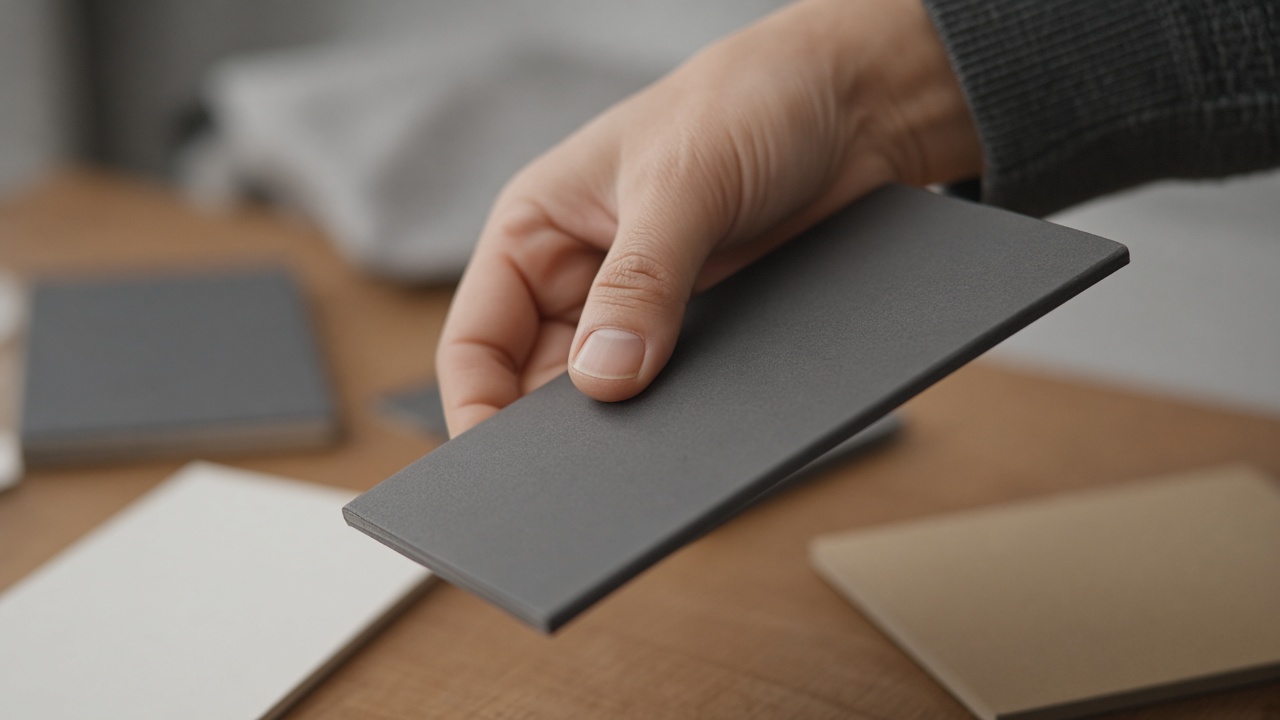
At sample approval, teams often invest their budget and attention in how a product looks from a distance, only for its gaps and feel in the hand to undo that impression. A more reliable approach is to set separate standards and reference samples for every surface people touch, then make those tactile standards part of the approval process.
Putting tactile details in a document does not mean they will reach sample approval. The first step is to set separate standards and reference samples for the parts people touch.
If that guidance is reduced to a shorter version of the visual brief, frontline teams will still face the same problem: gaps and textures felt in the hand undo the impression made from afar.
Set separate standards and reference samples for the parts people touch. Without them, tactile details remain secondary to how the product looks from a distance.
Tactile details are most often lost when work is divided into tasks. Each department takes away a phrase it can repeat, but not the corresponding grounds for saying no.
The product may still look right from a distance, while no one internally can account for why its gaps and feel undermine that impression in the hand.
The smallest useful unit of tactile guidance is not an entire manual. It is a judgment someone can make on the spot. That is what the tactile standards should provide.
Frontline teams should not have to guess what the brand team would think about a tactile detail.
Approve the reference sample, then inspect one point of use to see whether the tactile standards have slipped back into a purely visual brief.
Reinterpretation is not necessarily a problem. The problem is failing to acknowledge when it has changed the tactile details.
Judgment must remain with the people using the standards. The design lead owns them, while teams on site must have the authority to reject work that falls short.
At the end of training, ask just one question: with your eyes closed, does it still feel like a product of the same quality?
From non-negotiable principles to tools people can use on site, each layer answers one question. Together, they keep tactile details from being reduced to a brief focused on appearances from afar.
This layer defines what cannot be compromised in the tactile details.
This layer turns tactile details into conditions that can be checked.
This layer sets out what can vary across different contexts.
This layer gives users the guidance they need and defines the exceptions.
Note: This diagram is a conceptual framework. It explains a way of thinking and is not statistical data. Source: Qingmei Future Insights.
Identify the moment tactile details are actually assessed during sample approval. Do not begin by rewriting the visual brief.
Use tactile standards in place of a longer explanation. Keep only what supports separate standards and reference samples for the parts people touch.
When approving the reference sample, ask only this: with your eyes closed, does it still feel like a product of the same quality? If no one can answer, no decision has been made.
The design lead owns the standards. Without an owner, tactile details will quietly change when priorities conflict.
When packaging is designed only for transport and unboxing, no one knows what should happen to it afterward.
When product form is settled first as an attractive image, it may prove unworkable in terms of structure or cost and have to be changed.
When product interaction starts with screens and lighting, how people use their hands and bodies gets left until later.