
Unboxing is a sequence, not a layer of decoration
In unboxing experiences, if unboxing still means adding decoration to every layer, the result is often a sequence with no purpose and decoration with nothing to accomplish.

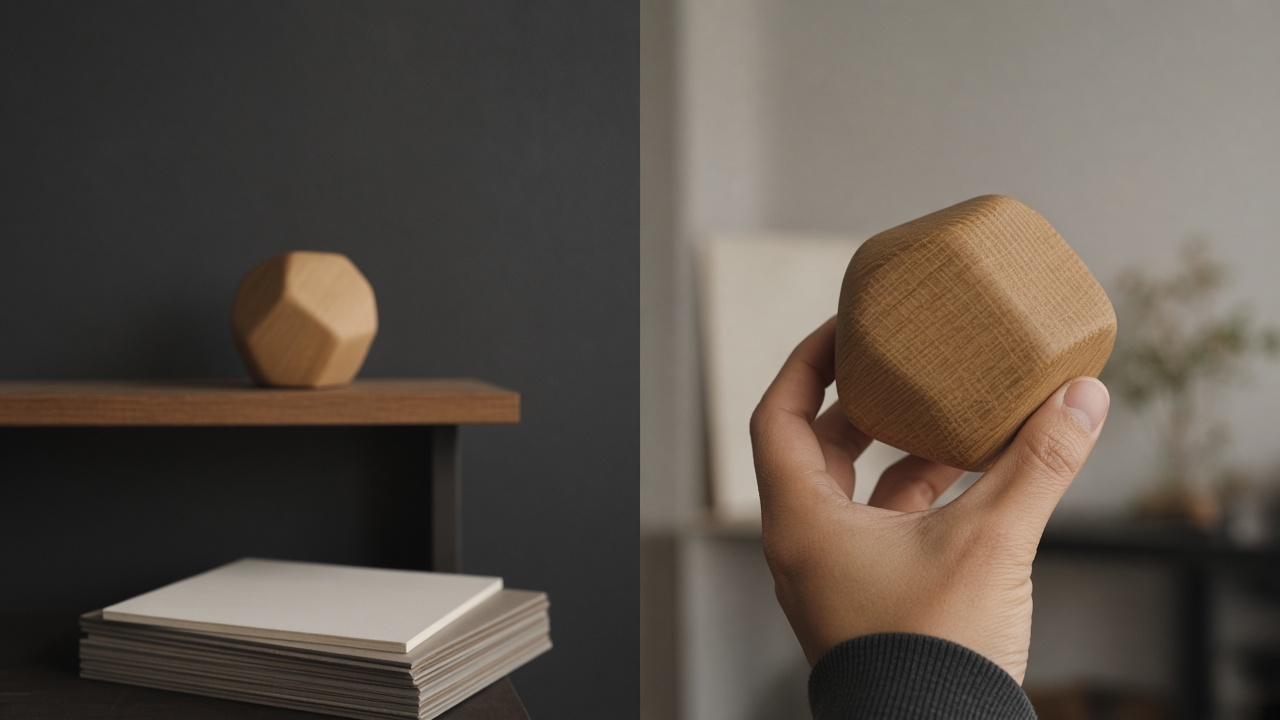
In packaging design, one message seen from a distance and another discovered up close can cancel each other out. A stronger approach uses the same message at both distances, changing only the level of detail, and formalizes that choice in message hierarchy guidelines.
Packaging briefs often call for one message from a distance and another when the product is picked up. It is easy to agree while the real problem remains untested: the two readings cancel each other out.
The meeting ends quickly. But once the people responsible for making the design work leave the room, the same problem remains: the two readings cancel each other out.
Use the same message at both distances, changing only the level of detail. Until that happens, the packaging still presents one message from afar and another in the hand.
The obstacle is not a lack of expressive skill. A brief that allows one message from a distance and another up close can justify almost anything, leaving the two readings free to cancel each other out.
As more people look to the approach for answers, it becomes more abstract, and the old problem returns: the two readings cancel each other out.
A more useful starting point is one message at both distances, with different levels of detail. Define what is ruled out first; only then can the approach guide real choices.
Keeping one message from a distance and another up close may make the brief easier to write, but the problem remains: the two readings cancel each other out.
Capture this starting point in message hierarchy guidelines. For distance and close-up views, that single page is more useful than another lengthy explanation.
At reviews, use the message hierarchy guidelines as the reference. Do not redefine the relationship between distance and close-up views in every discussion.
Assign responsibility to a specific person: the design lead. Without an owner, the approach will be rewritten at the first conflict.
Keep one acceptance criterion: as people move closer, does the central message stay the same? Until that can be answered, the approach is not yet a decision.
From non-negotiable principles to practical tools, each layer answers one question, preventing a return to one message from a distance and another in the hand.
This layer defines what cannot be compromised between distance and close-up views.
This layer turns the relationship between distance and close-up views into conditions that can be checked.
This layer defines what can change across distance and close-up views in different contexts.
This layer puts the approach to distance and close-up views in the hands of those who use it and makes the exceptions explicit.
Note: This diagram is a conceptual framework. It explains a way of thinking and is not statistical data. Source: Qingmei Future Insights.
Identify the moments in packaging design when distance and close-up views actually inform a decision. Start there, rather than revising a brief that gives each view a different message.
Replace lengthy explanations with message hierarchy guidelines. Keep only what supports the principle: “Use the same message at both distances, changing only the level of detail.”
At reviews, ask just one question: as people move closer, does the central message stay the same? Until that can be answered, the decision is not complete.
Owner: design lead. Without someone to maintain it, the approach to distance and close-up views will quietly change when priorities conflict.
In unboxing experiences, if unboxing still means adding decoration to every layer, the result is often a sequence with no purpose and decoration with nothing to accomplish.
In structural reviews, if packaging structure is still left to engineering while the brand team only looks at graphics, the result is often a structure saying one thing while the graphics say another.
In imagery guidelines, if photography style is still described by filters and settings, the result is often settings that break on a different device, while the subject was never defined.