Jasmine Tea
design concept
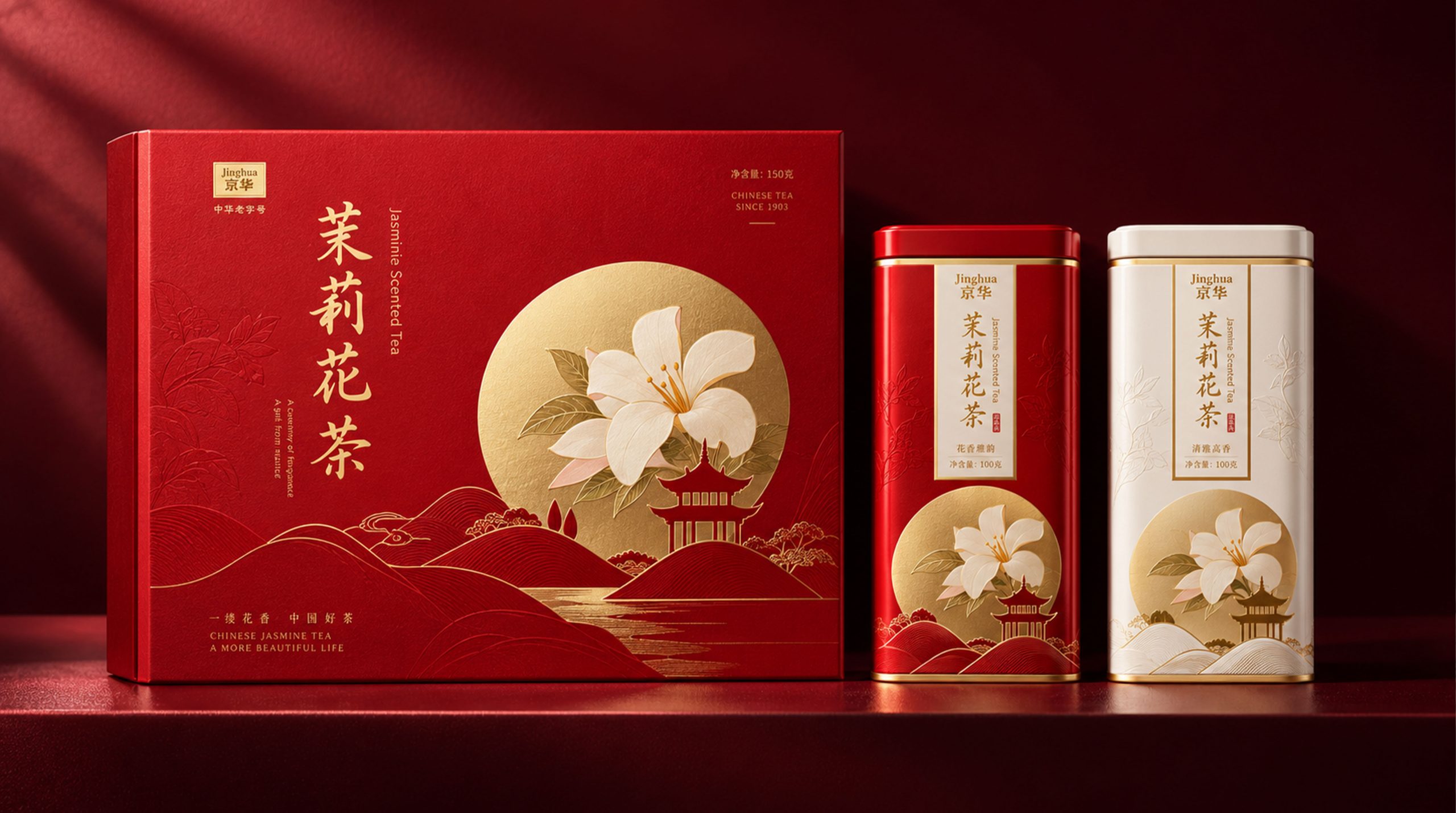
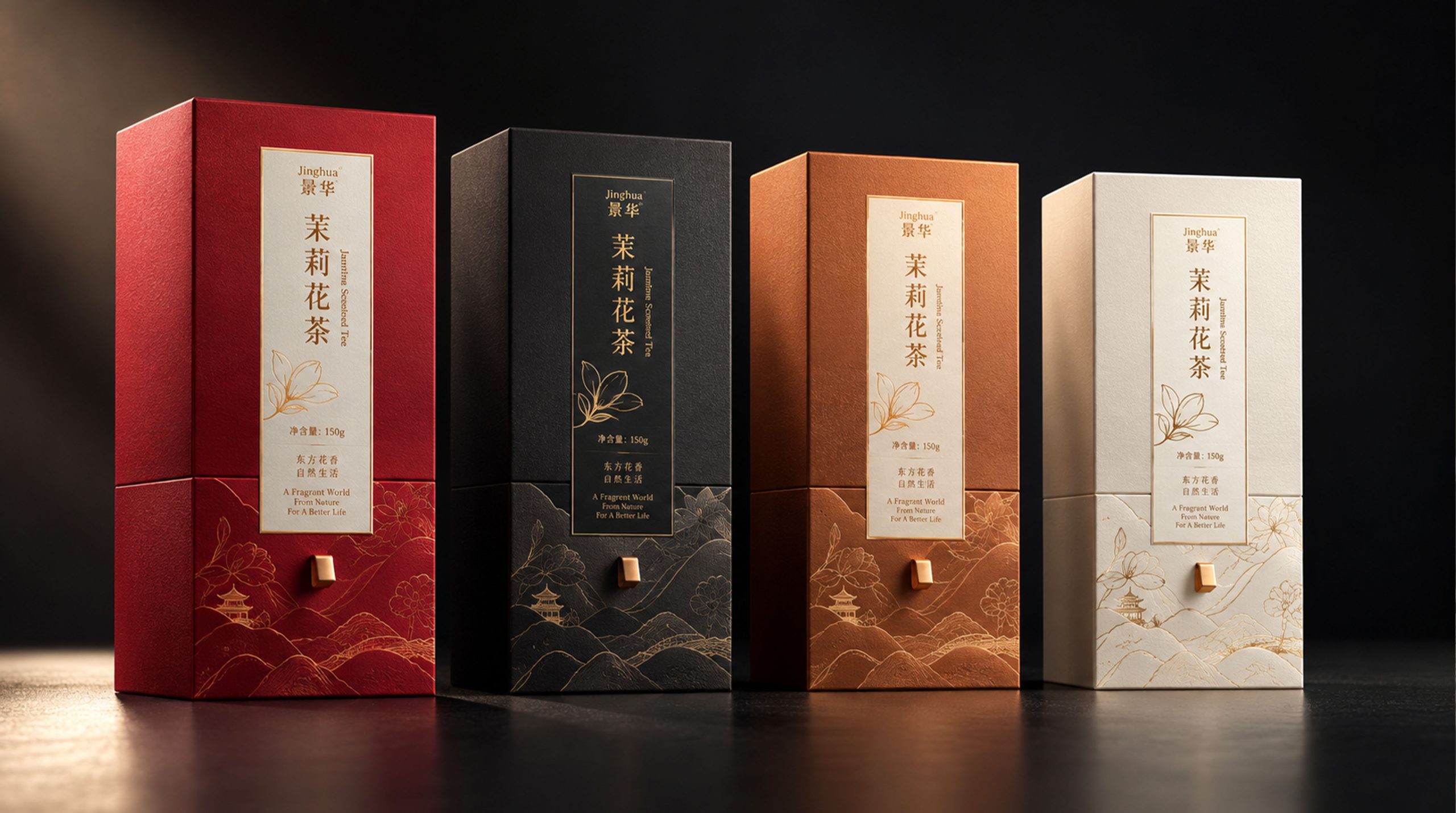
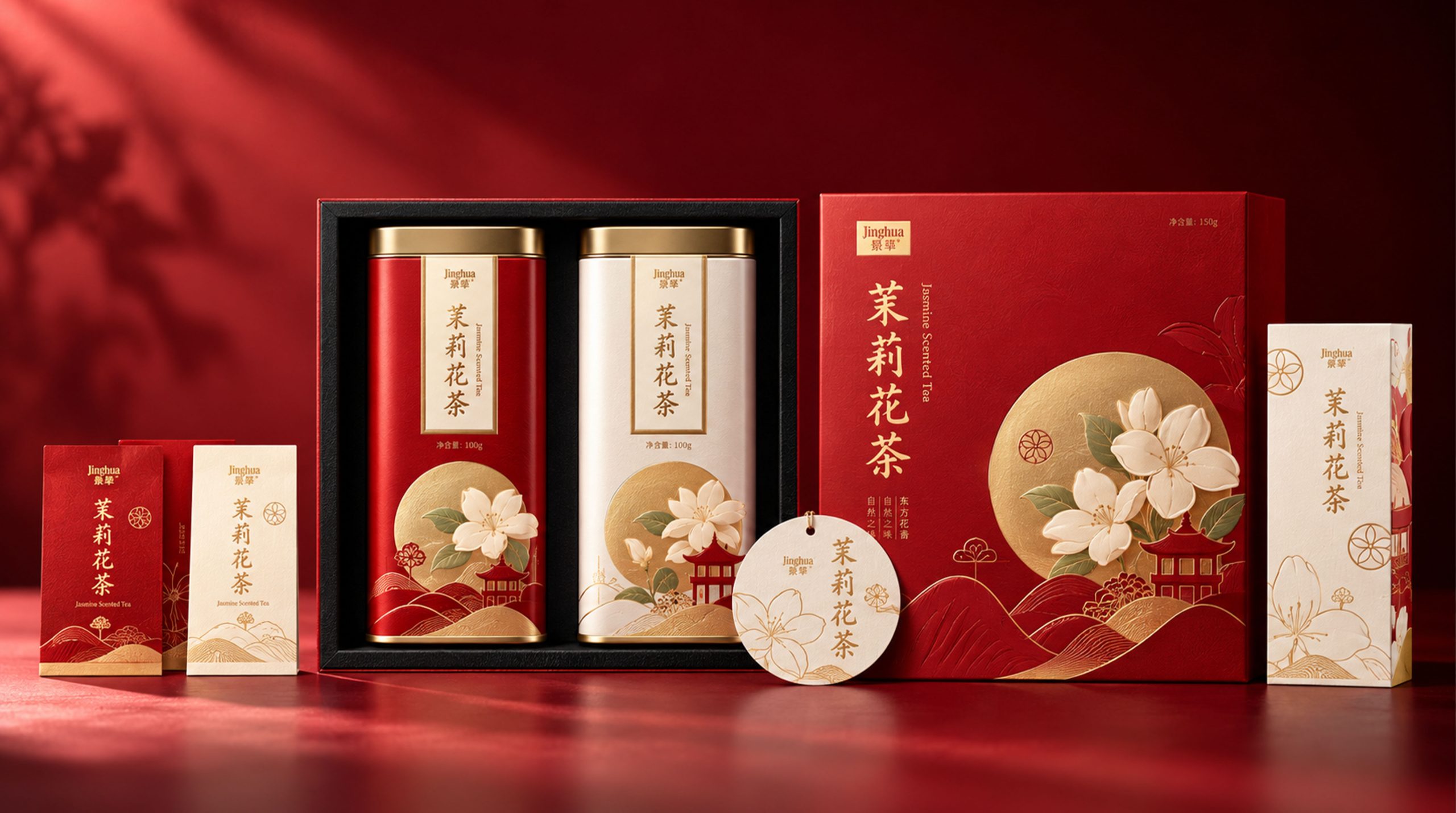
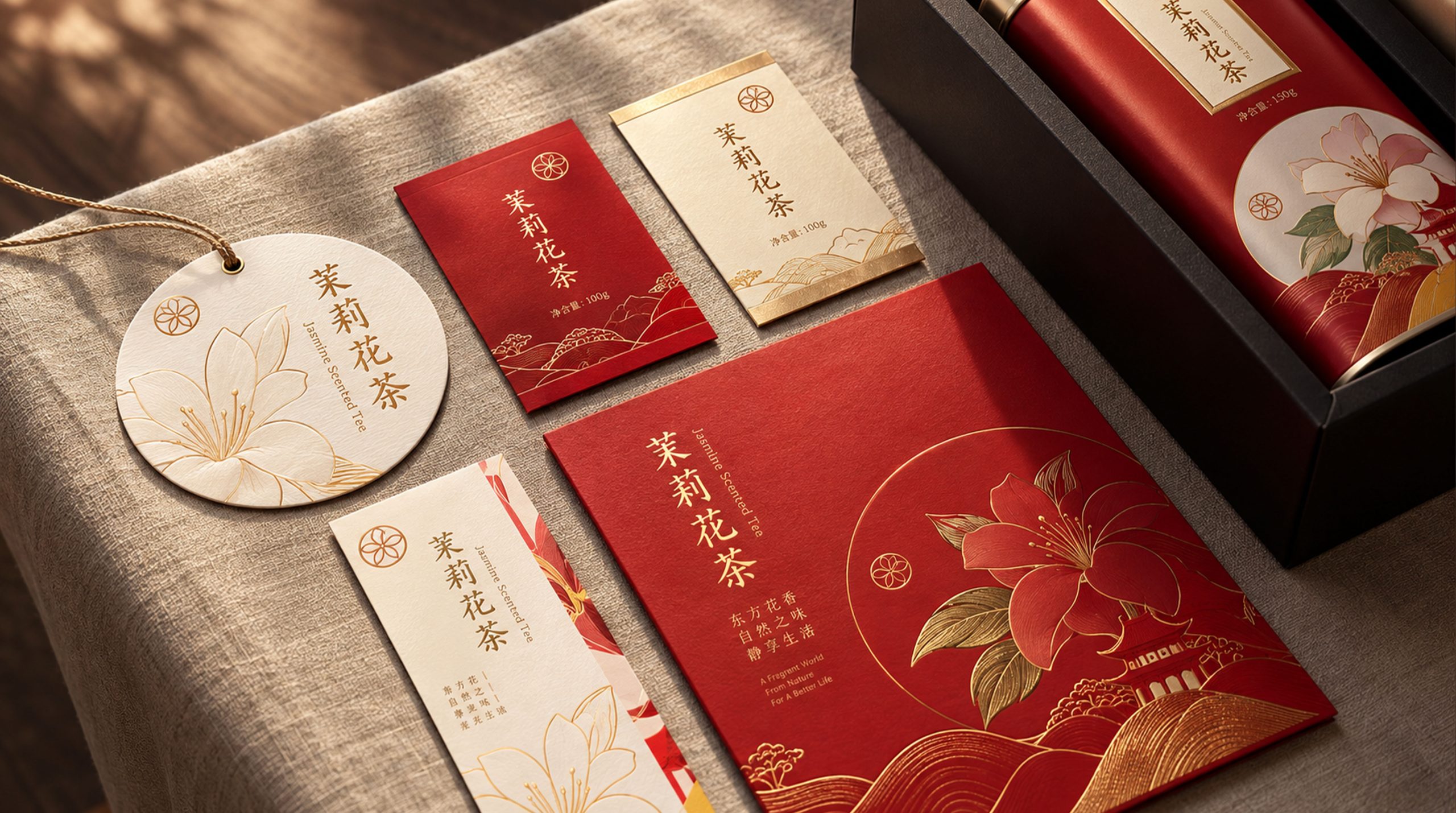
The packaging concept for this jasmine tea is deeply inspired by traditional Chinese art. The overall style is clean and elegant, with colors that are vivid yet dignified. A palette of red and gold symbolizes good fortune and prosperity in Chinese culture, while also evoking the fragrance and quality of the tea itself.
The design incorporates elements of traditional Chinese shanshui landscape painting, minimal yet rich in Eastern character. By combining modern and traditional modes of artistic expression, the packaging conveys the brand's respect for and continuation of its cultural heritage, while its contemporary edge reflects a spirit of innovation.
Packaging Structure & Materials
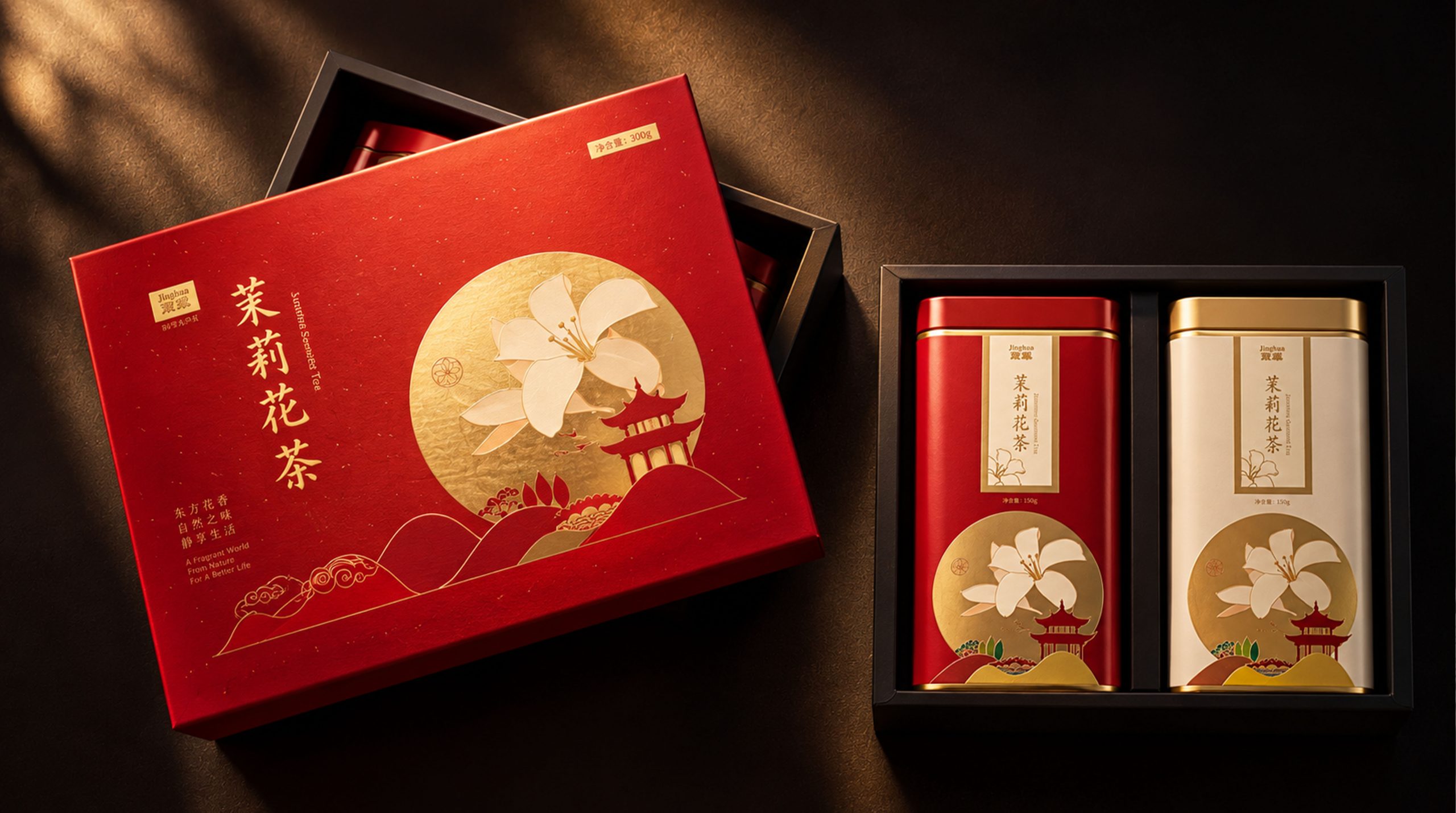
Premium paper stock gives the packaging a smooth, delicate finish. Clean, simple lines make it instantly recognisable. The shanshui motif is rendered in fine gold linework, lending the exterior a refined, collectible quality. The box is sized for easy display and portability, suited to the everyday needs of modern consumers.
A convenient top closure makes the box easy to open while keeping it tightly sealed to preserve the tea's freshness and quality. Every part of the packaging has been carefully considered to ensure a premium, refined result.
Visual Design & Elements
The packaging makes a striking visual impression. A vivid red background set against delicate gold landscape motifs creates a sense of noble elegance. On the front, a large circular motif frames a jasmine flower in full bloom, symbolizing the product's key ingredient and expressing a brand image that is fresh, natural and healthy.
The “Jasmine Tea” wordmark is set in a clean, modern typeface that retains a subtle trace of traditional calligraphy, perfectly complementing the cultural depth of the overall design. Gold detailing adds a touch of luxury, giving the packaging a character that is both fresh and noble.
Brand Character & Consumer Experience
The jasmine tea packaging is designed not only for visual beauty but, above all, for the consumer experience:
- Visual appeal:Vivid color and traditional cultural elements immediately catch the eye and spark the desire to purchase.
- Emotional resonance:The design conveys the brand's respect for and continuation of Chinese cultural tradition, creating an emotional connection at the point of purchase and building brand loyalty.
- Functionality:As practical as it is beautiful, the packaging is easy to store and use, with a simple opening that gives effortless access to the tea.
Innovation & Market Positioning
This jasmine tea packaging successfully unites traditional and contemporary elements, reflecting the brand's innovation and growth. Through bold color, minimal composition and traditional cultural motifs, the design delivers packaging that is both culturally rich and distinctly modern. It is especially well suited to a premium positioning, appealing to modern consumers who value quality, culture and aesthetics.
The design is in step with market trends and resonates with consumers' aesthetic sensibilities. Through this refined execution, the brand has built an image that is premium, natural and healthy.
Summary
The jasmine tea packaging is a perfect union of culture and contemporary aesthetics. It embodies the cultural depth of Chinese tradition while expressing the brand's premium positioning and spirit of innovation through a contemporary design language. Every detail reflects the brand's deep understanding of quality, the consumer experience and traditional culture.