







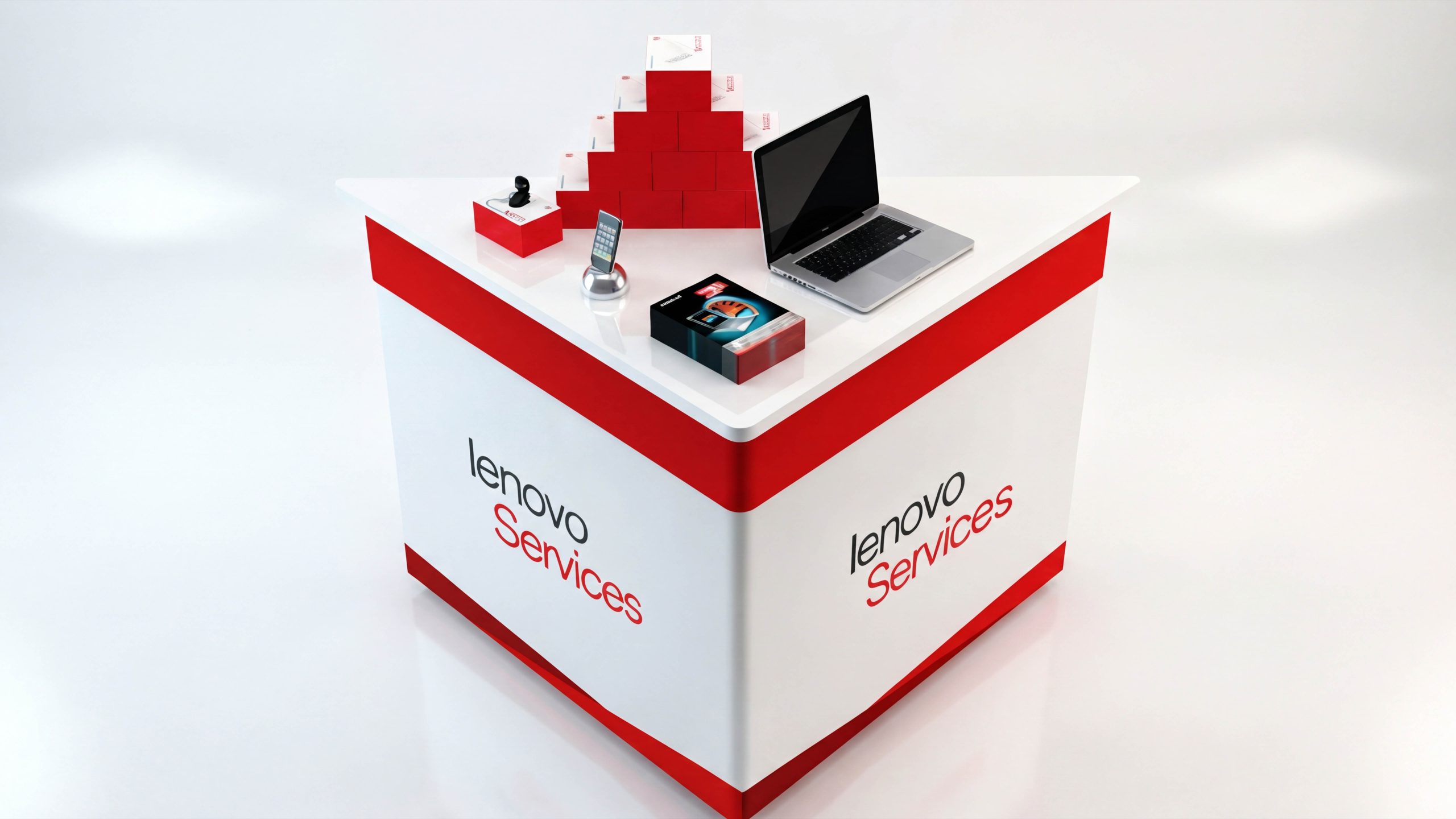
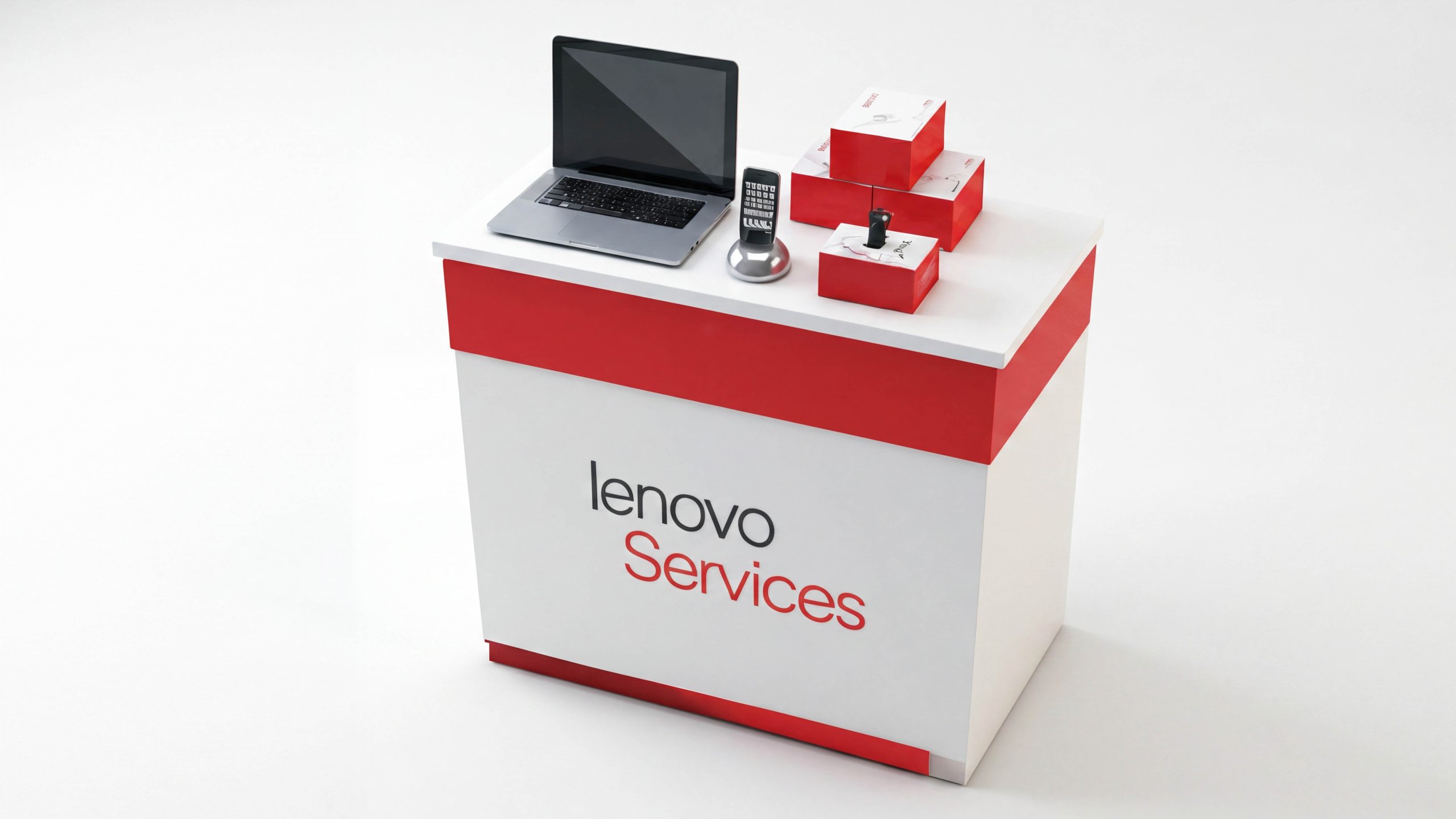
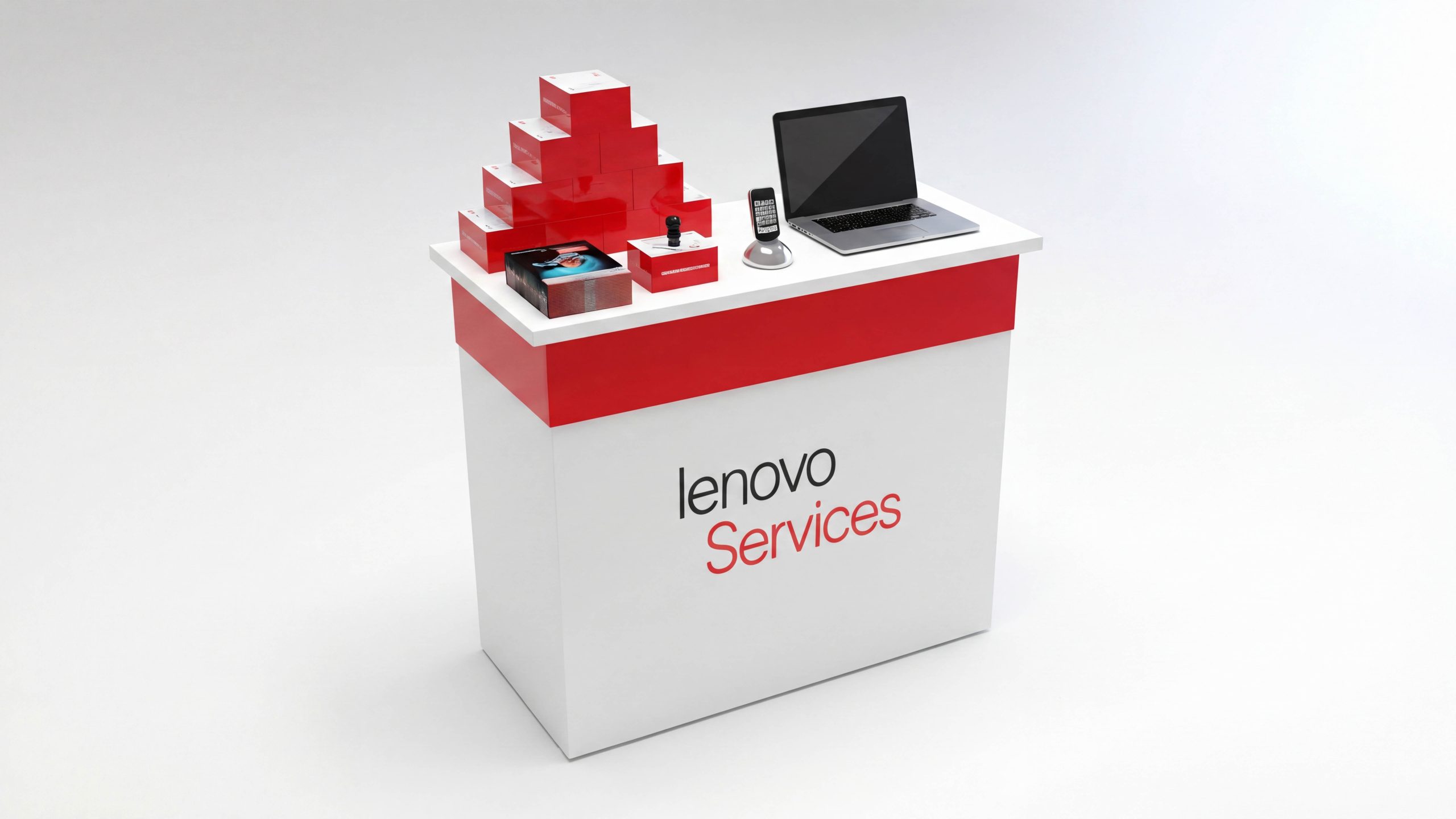
This project is supported by methodology and cases provided by "Beijing Qingmei Future Advertising Design Company", and the service targets are "Lenovo counters". The scene covers island cabinets in shopping malls, pop-up counters in front of stores and after-sales service reception desks.
The goal is to establish a replicable, low-maintenance, and scalable counter system in a high-traffic, fast-decision-making retail environment that not only embodies the rationality and reliability of the Lenovo technology brand, but also allows customers to complete experience, consultation, and purchase in the shortest path.
Brand positioning and counter goals
Lenovo counters are defined as "the first point of contact for product strength and the front desk for services." The design tone needs to be professional, clear, and approachable. We set three goals: rapid identification and arrival, barrier-free information understanding, and smooth transaction and conversion. Correspondingly build an information structure of "identification layer - display layer - interaction layer - conversion layer", covering visual identification, product presentation, function demonstration and price policy explanation, ensuring that new and old customers can quickly obtain key information.
Systematic design strategy
It takes "one module, two forms, three types of modules, four levels of coding, and five-minute exhibition changes" as the core. A module: 8pt/4mm grid runs through the light box, side panels, skirting and table top molding to ensure a consistent look and feel in different sizes. Two forms: the island cabinet and the wall cabinet share the same frame and can be expanded or contracted according to the area. Three types of modules: fixed structure (table body, light strip), variable information (price tag, selling point card), flexible props (display tray, digital base). Four-level coding: series-model-configuration-color, label color corresponds to alphanumeric. Five-minute display change: Through the magnetic suction and plug-in interface, a single person can complete the model replacement and selling point update.
Visual and Construction Specifications
The color uses Lenovo classic red as the main functional color, with high-purity white and neutral gray as the background to ensure long-distance recognition and close-range contrast. The corners of the table body are rounded and chamfered to convey a sense of technological affinity. The fonts are uniformly high-readable sans-serif, with equal weight for Chinese and numbers; the price tags are divided into three levels: model name ≥ 24pt, key selling points 18–20pt, and parameters 12–14pt. The light source uses 4000–4500K neutral light, and the side light guide plate controls the brightness without dazzling. Icons, arrows, and numbers share line width and corner radius to ensure consistency in mass production.
Touch point process and experience design
Long-distance attraction: The small lintel flag + the back panel light box form an identification surface of 15-20 meters to clarify the brand and main series. Close understanding: The countertop has "information on the left and experience on the right", with the selling points, price tags and gift information concentrated on the left, and prototypes and accessories for trial use on the right. Interactive guidance: Each prototype is equipped with an NFC or QR code, which provides direct access to the configuration page and inventory status; a "Getting Started Experience Area" label is added to the front edge of the tray to eliminate trial concerns. Closed transaction loop: There is a "service list" and "trade-in entrance" on the side of the platform to clarify the after-sales, extended warranty, installment and recycling processes. The materials are scratch-resistant acrylic, matte powder-coated metal, and a hidden wiring base. Standard power supplies and USB-C cables are reserved on the table for easy demonstration and maintenance.
Delivery and operation and maintenance mechanism
Promote according to "Strategy - Proofing - Pilot - Marking - Mass Production - Maintenance". During the proofing stage, viewing distance and reflection tests were conducted, and brightness and color temperature were calibrated; data on people flow and length of stay were collected during the two-week pilot period to optimize price tag density and movement lines. The mass production documents include explosion drawings, bill of materials, silk screen and light box templates to ensure consistent implementation across cities. The operation and maintenance manual stipulates replacement frequency, cleaning methods and tolerance standards; price tag templates and promotional inserts are automatically generated from tables and exported as printed PDFs. Common parts are packaged in modular spare parts, and minor repairs can be completed within 10 minutes, ensuring that the counter maintains a strict sense of order and stable sales performance for a long time.