










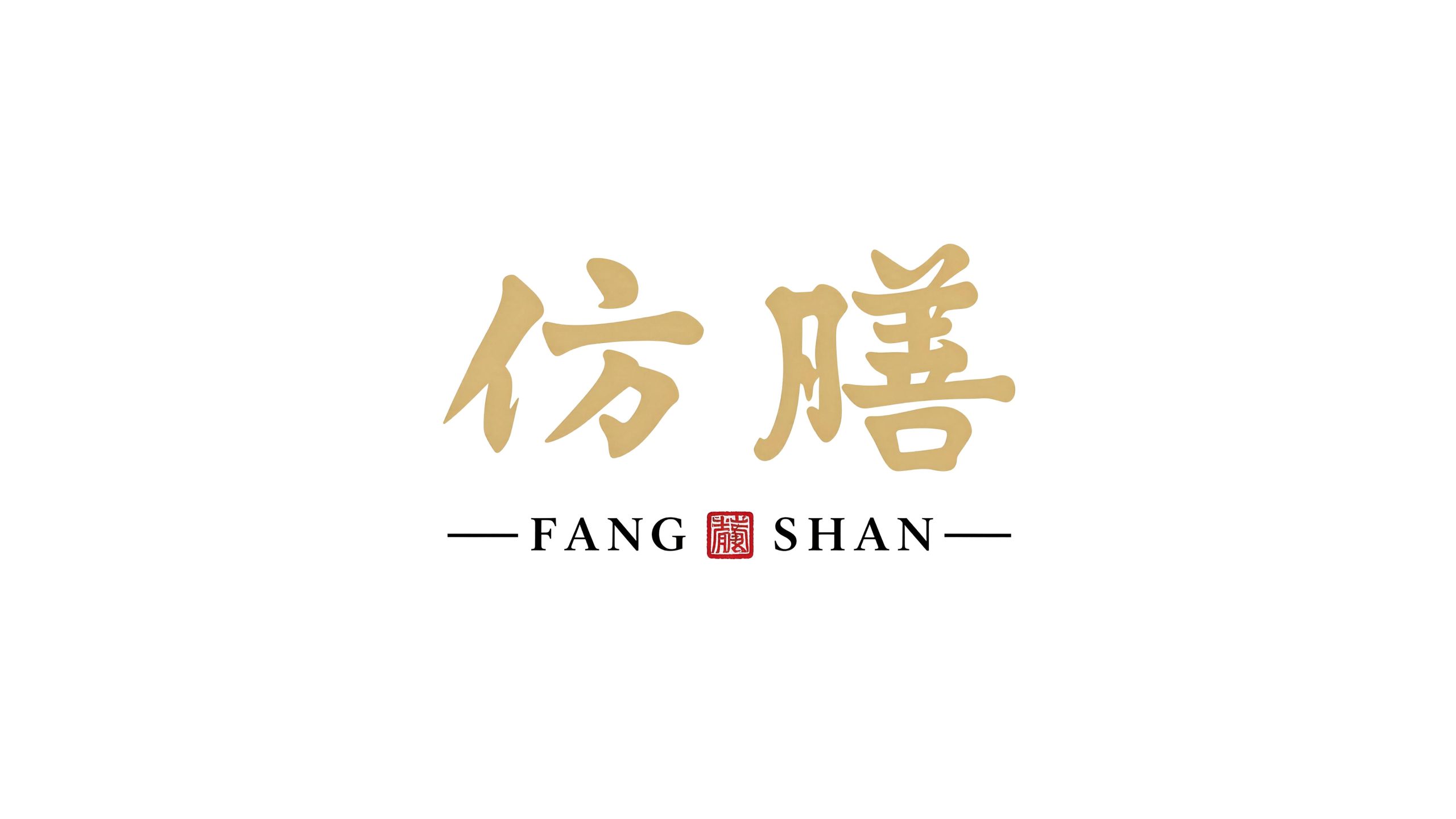
Fangshan Restaurant is China's most representative imperial cuisine catering brand. It is located in Beijing's Beihai Park. It was founded in 1925 by the former imperial chef of the Imperial Kitchen of the Qing Palace. With authentic palace imperial cuisine as its core, it has completely inherited the essence of the royal food culture of the Qing Dynasty.
The word "Fangshan" means "imitating royal food". For nearly a hundred years, the brand has been adhering to the devout protection of palace catering techniques, using the highest standards of ingredients, the most exquisite craftsmanship, and the most solemn rituals to recreate the ultimate delicacies on the royal table for guests. Qingmei Future was commissioned to lead the brand identity design.
The design goal of the brand logo is to show the supreme status of Fangshan Restaurant as the inheritor of imperial cuisine through the visual language of royal charm, palace ritual and cultural inheritance, and to convey the brand image of "royal cuisine orthodoxy, royal style, and century-old inheritance".
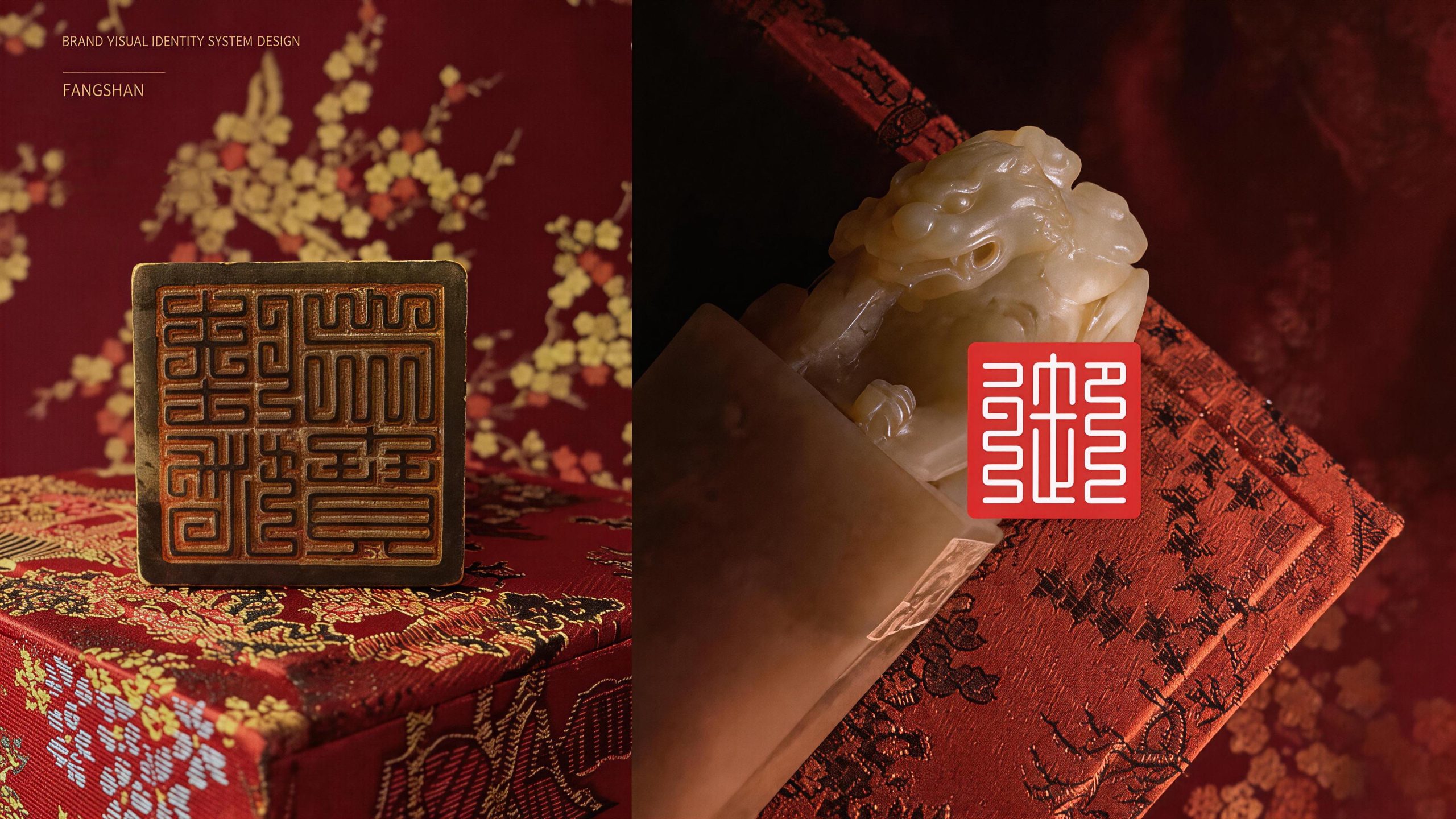
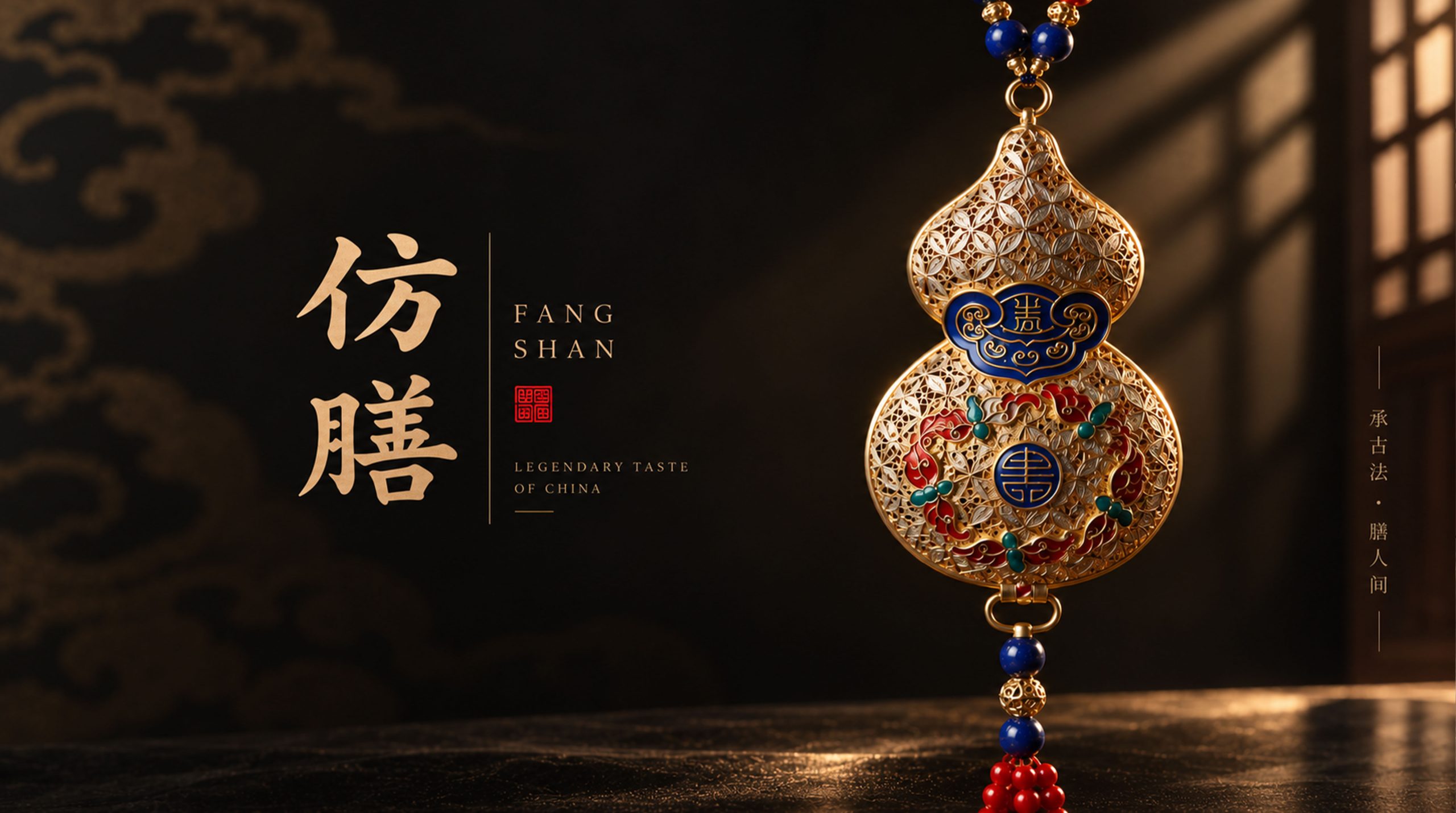
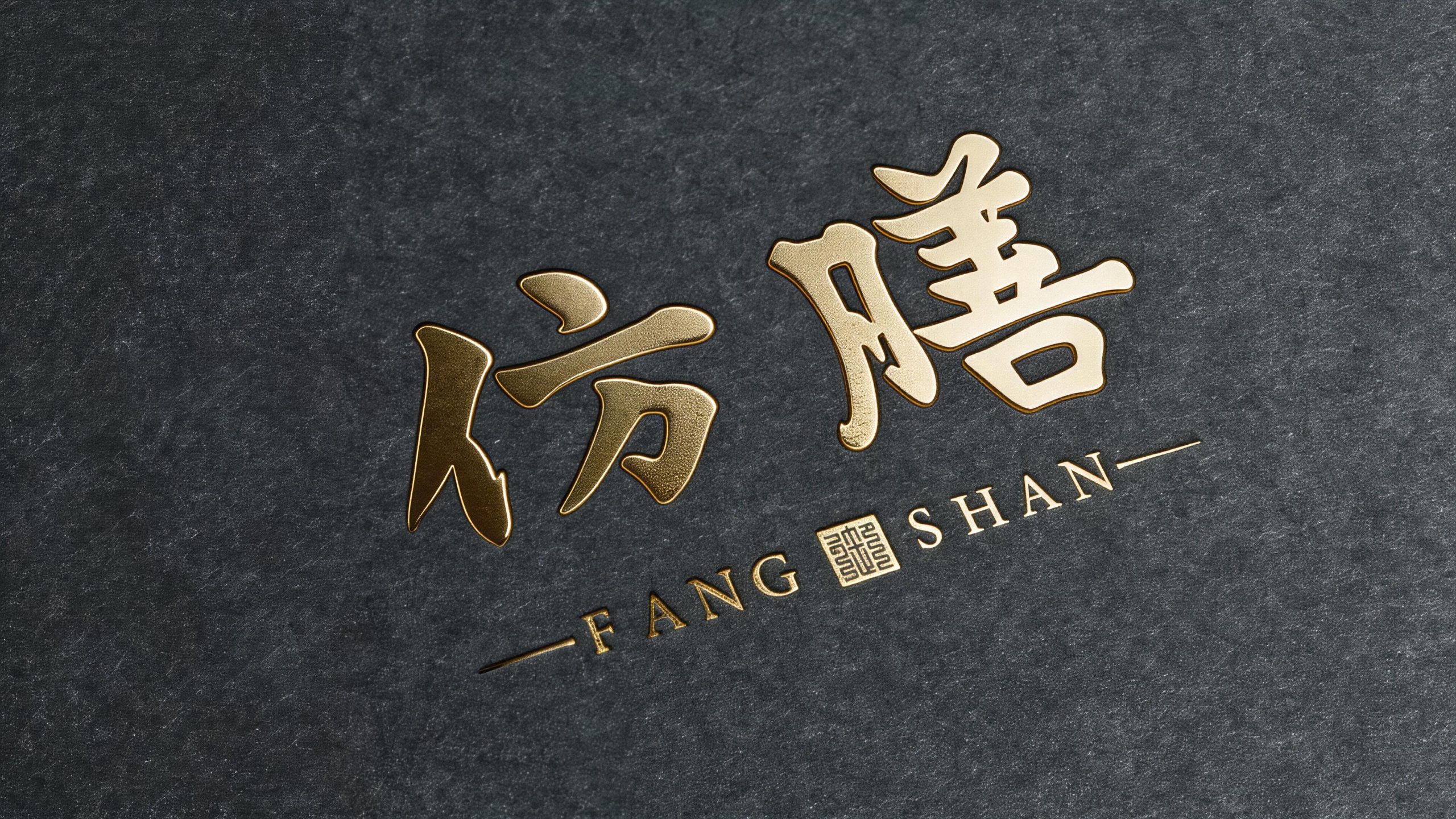
Design concept and graphic language
The logo takes "Imperial Dragon Seal" as the core concept, and uses a highly artistically refined coiled dragon as the main graphic. The dragon's body meanders in a circular composition, creating a brand emblem that is both a royal totem and the Imperial Seal's seal. The dragon is the most supreme symbol of Chinese royal culture. In the Qing Dynasty palaces, dragon patterns were found in every aspect of the emperor's clothes, utensils, architecture and meal etiquette. Choosing the dragon pattern as the brand totem of Fangshan Restaurant directly establishes an irreplaceable and orthodox connection between the brand and royal meals - Fangshan is not an ordinary Chinese meal, but a contemporary continuation of the royal dining table. The overall design integrates the complex beauty of palace decorative art with the simple order of modern brand logos, reflecting the dual attributes of Fangshan Restaurant in cultural heritage protection and commercial brand management.
The dragon is presented in a bird's-eye view, with its head located slightly above the center of the circular composition. Its eyes are wide open, its beard is fluttering, and it holds a pearl in its mouth. Its facial expression is majestic but auspicious, conveying the supreme authority of the royal meal and the solemn courtesy of the Fangshan restaurant to the guests. The dragon body spirals and extends from the dragon's head to both sides, surrounding the internal space with a smooth S-shaped curve. The dragon scales are carefully arranged in regular arc-shaped textures. Each scale is geometrically refined, which achieves the orderly beauty of the pattern while maintaining the recognition of the dragon scales. The dragon claws are distributed at the key nodes of the dragon's body in a powerful and powerful manner. The five claws are spread out and powerful - the five-clawed dragon is the highest-level dragon pattern exclusively used by the emperors of the Qing Dynasty. This detail further strengthens the brand's royal legitimacy. The dragon's tail is elegantly gathered at the bottom of the circular composition, and the tip of the tail is slightly upward, echoing the dragon's head, forming a perfect composition where the head and tail are connected and the flow continues. The internal blank space formed by the circling dragon body just carries the brand name "Fangshan", making the text and graphics mutually dependent and inseparable in the same composition.
The circular outer frame is composed of double layers of concentric circles, and the annular belt between the inner and outer circles is decorated with evenly arranged Ruyi cloud patterns. Ruyi cloud patterns are one of the most common auspicious patterns in palace decorations in the Qing Dynasty, symbolizing "all goes well and longevity." The edge of the outer circle is bounded by a fine beaded pattern, which is like a string of pearls surrounding it, adding to the unique delicacy and luxury of royal artifacts. The composition and regulation of the overall circular badge is like a royal seal of the Qing Dynasty - round and solemn, with elegant decoration and clear hierarchy, conveying the brand authority and cultural orthodoxy of Fangshan Restaurant's "Royal Seal". The overall composition uses the palace aesthetic structure of "dragon on the seal and the seal on the ceremony" to construct the "imperial meal emblem", conveying the brand's royal blood and century-old heritage.
Font composition and color system
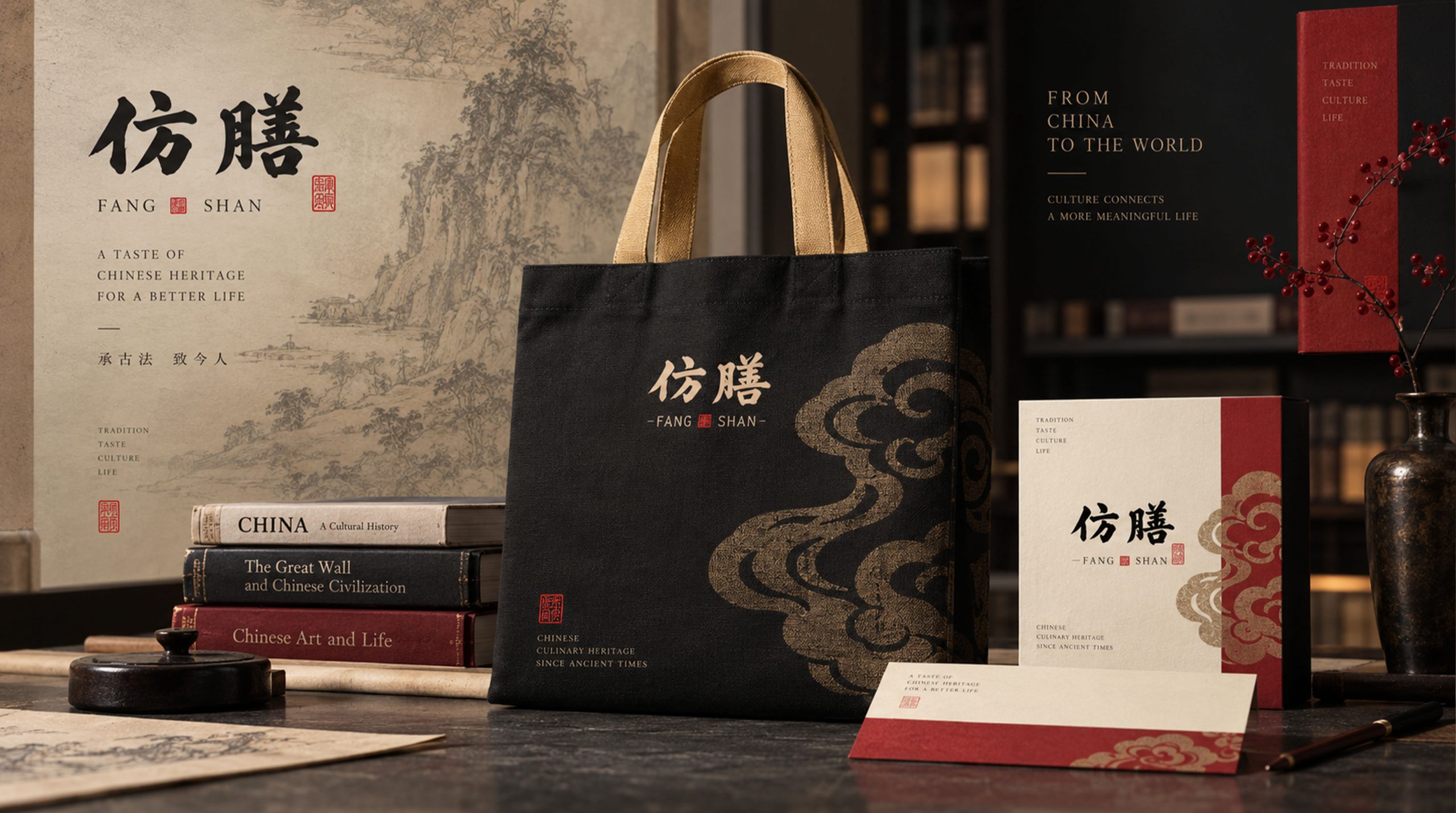
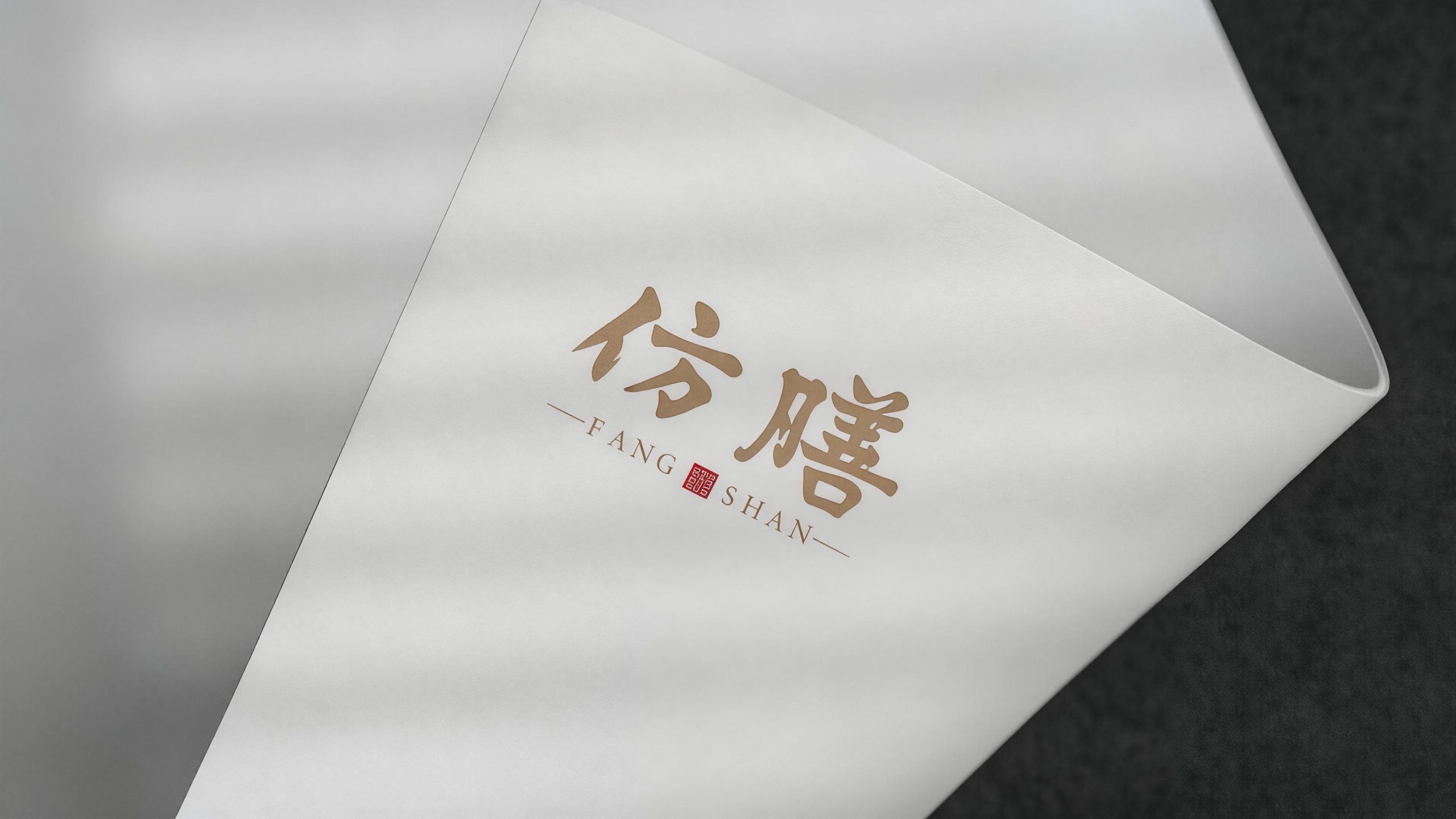
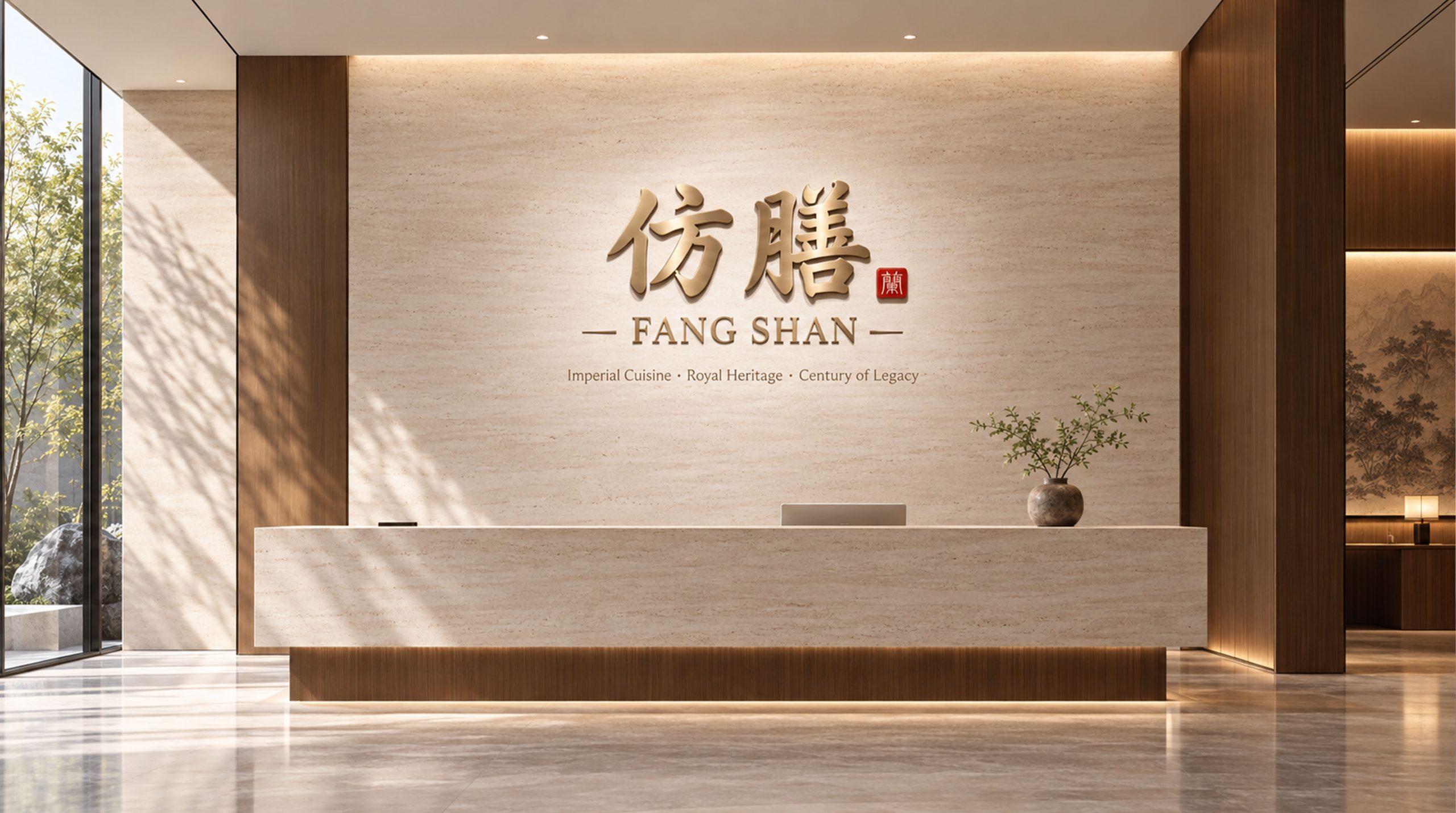
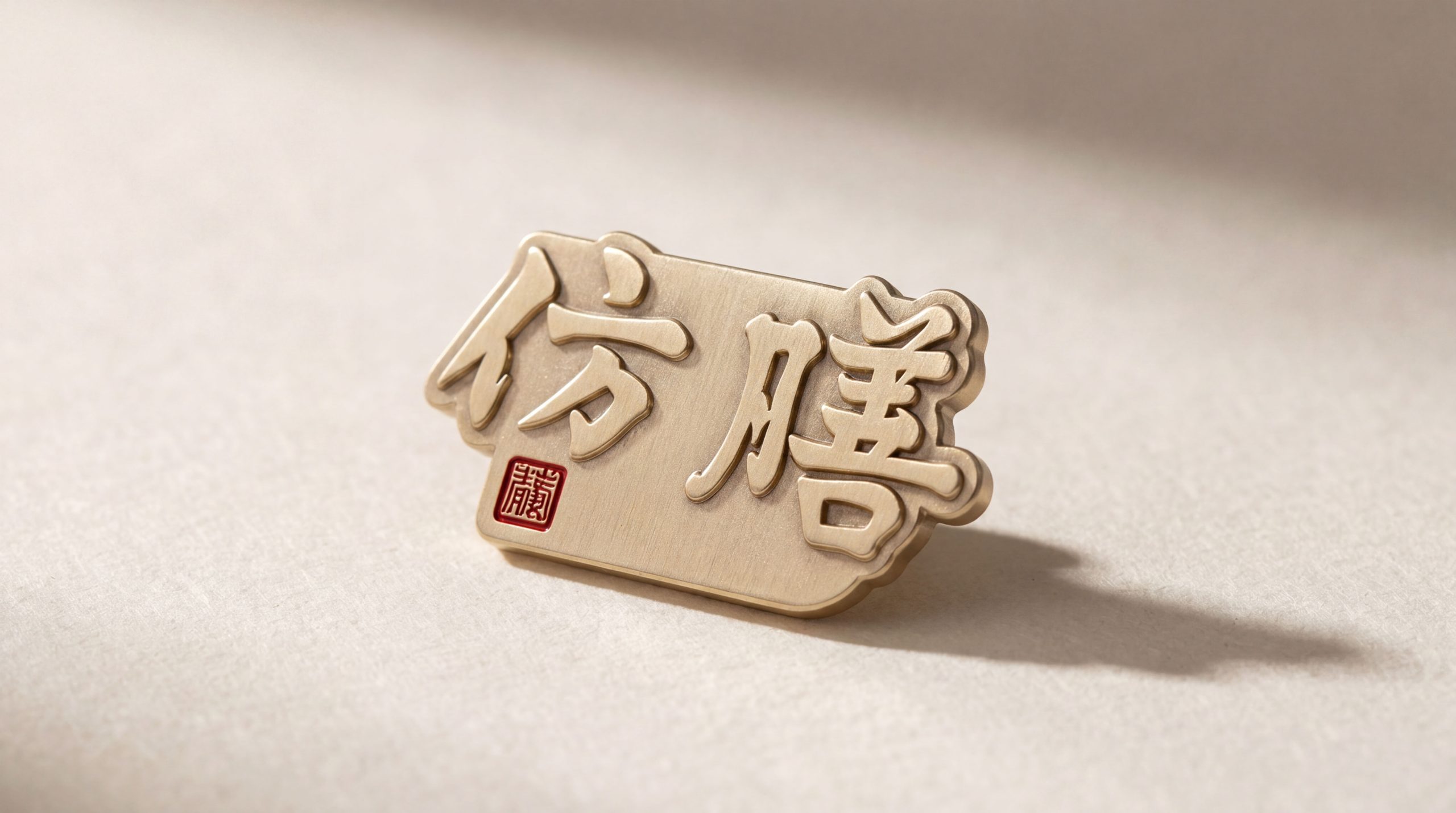
The word "Fangshan" is the core text asset of the brand, and its font design directly carries the solemnity and splendor of the imperial dining culture. The "Fangshan" in the logo adopts customized palace regular script fonts. The strokes are rich and full, and the structure is dignified. The starting point of the stroke is thick and steady like the cornerstone of the palace, the ending point is sharp and precise like the knife skills of an imperial chef, and the strokes are stretched like the robes of a dragon robe. The whole thing shows the unique elegance and magnificence of royal calligraphy. The character "imitate" is narrow on the left and wide on the right, with a modest structure, conveying the respect and loyalty to the royal meal tradition in the meaning of "imitate"; the character "shan" has dense strokes and a rich structure, conveying the richness and exquisiteness of the palace meals and the breadth and depth of the skills. The two characters stand next to each other, just like a pair of golden couplets on the imperial dining room. Every guest who walks into Fangshan can feel the royal charm from these two characters.
The English "FANGSHAN" is presented in a classic uppercase serif font. The strokes are broad and solemn, the serifs are exquisite and clear, and the letter spacing is relaxed and stretched, which is consistent with the magnanimity of Chinese regular script. "SINCE 1925" is arranged below the English in fine font, using the year of the brand's founding to establish the time authority that has been inherited for nearly a century. Chinese and English are arranged in the center under the circular badge with clear hierarchy, ensuring the standard recognition of the brand in international catering exchanges and foreign affairs receptions.
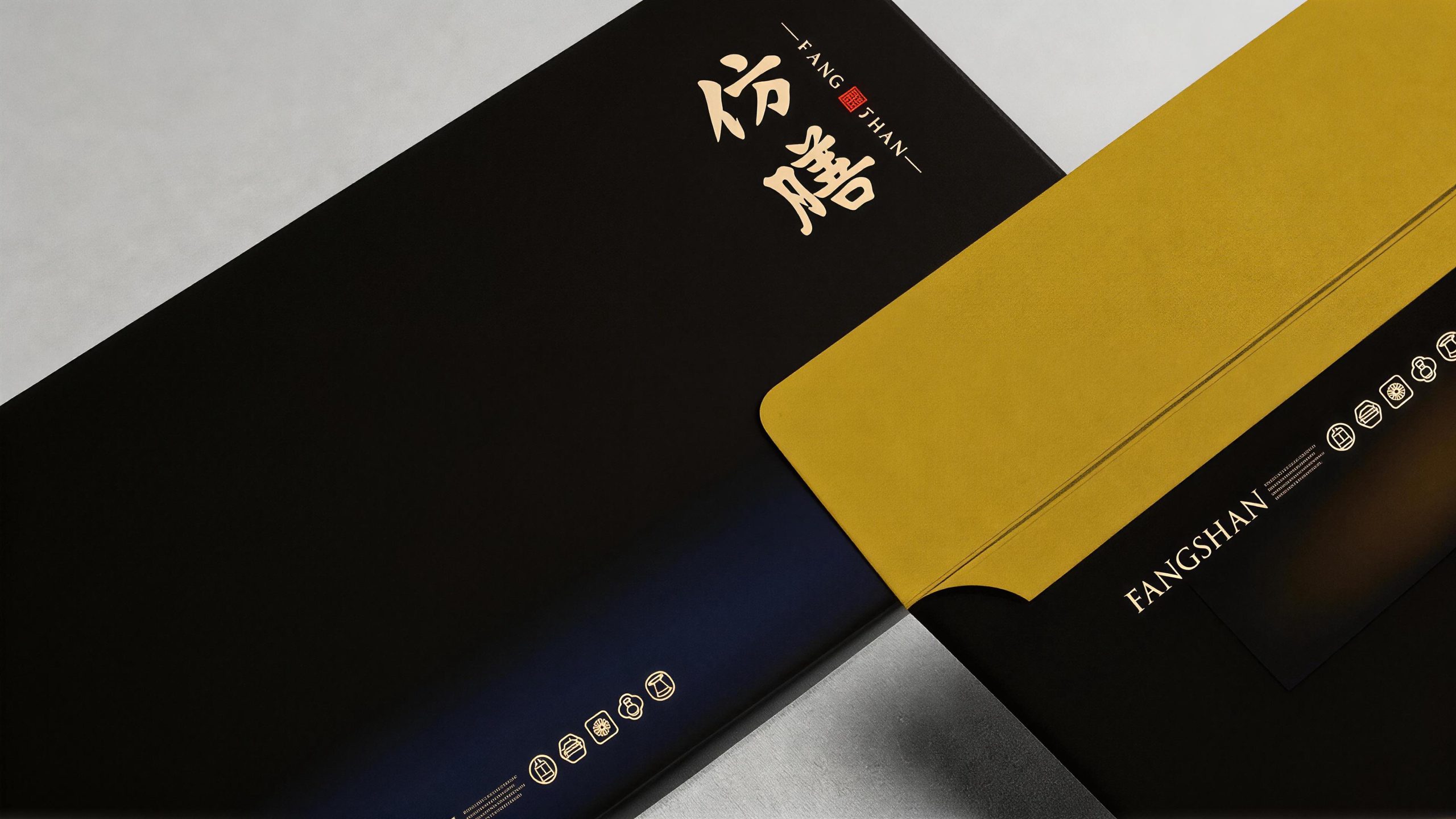
The main color is royal yellow #D4A017 → #B8860B. As the core color of the logo, it represents royal orthodoxy, supreme honor and the millennium accumulation of palace culture. Bright yellow was a forbidden color reserved for emperors in ancient China. Only the emperor could use true yellow. The choice of this color directly declares Fangshan Restaurant's royal royal cuisine lineage and the highest-level positioning of the brand. Imperial yellow is presented in a gradient of shades, from the bright golden yellow at the head of the dragon to the calm dark gold at the dragon's tail, just like the warm luster of palace goldware flowing under candlelight, giving the logo a material texture like a royal vessel. Auxiliary palace wall red #8B1A1A is used for solemn elements in the brand system, menu covers and festive materials, just like the deep vermilion of the palace walls of the Forbidden City, conveying the solemnity and ritual sense of royal architecture. Auxiliary black #1A1A1A is used for the basic text in the word mark and brand system, using the deepest tone to support the luxurious light of gold. Pure white #FFFFFF is used as the internal white space and standard background color of the graphics. The overall color system takes Yushan Yellow as the absolute core, supplemented by palace wall red and black, reflecting the brand style of "the color of the emperor, the honor of Yushan", and establishing the irreplaceable brand identity of Fangshan Restaurant with the most orthodox color system of the Chinese royal family.
Application extension and brand significance
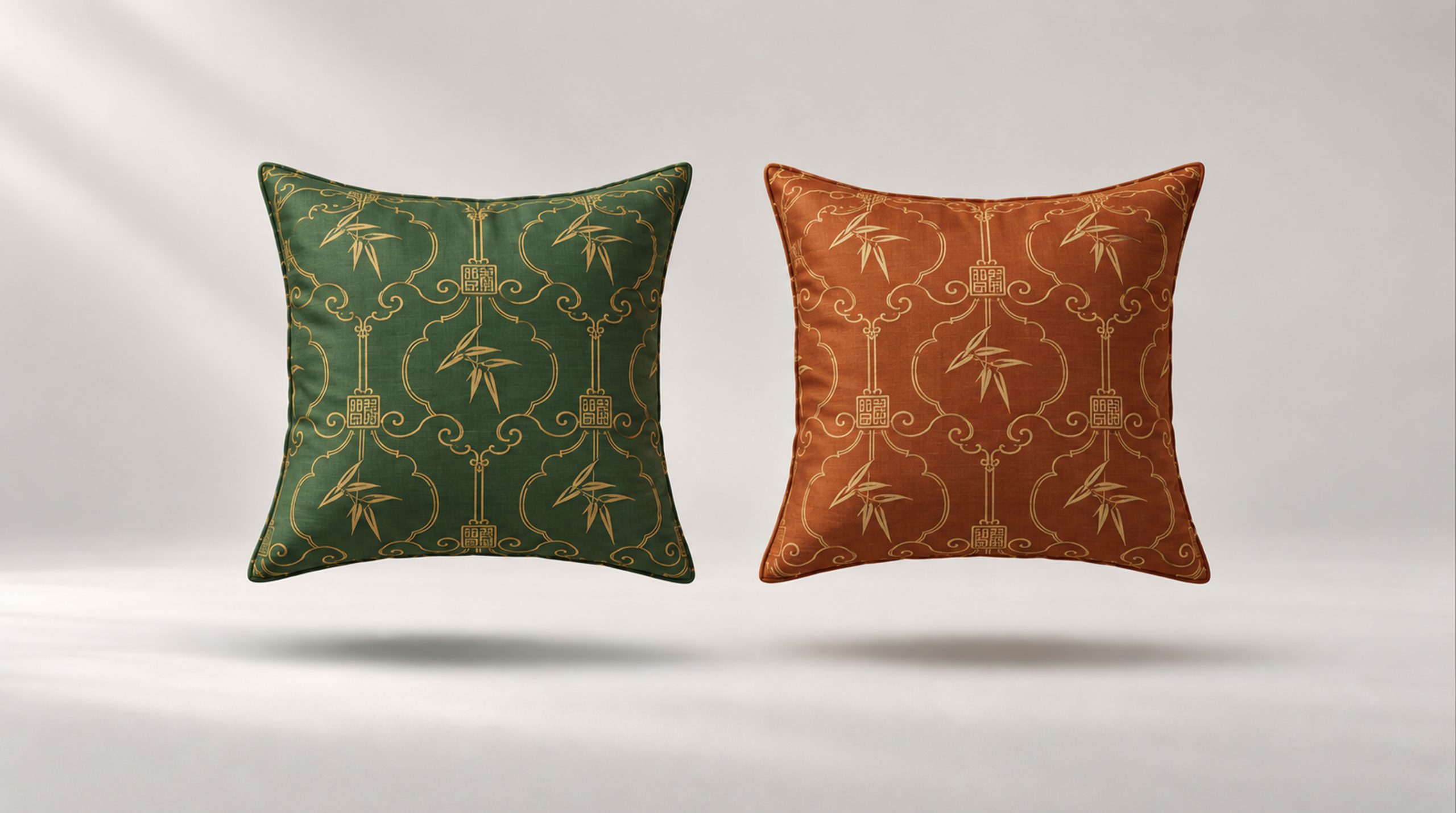
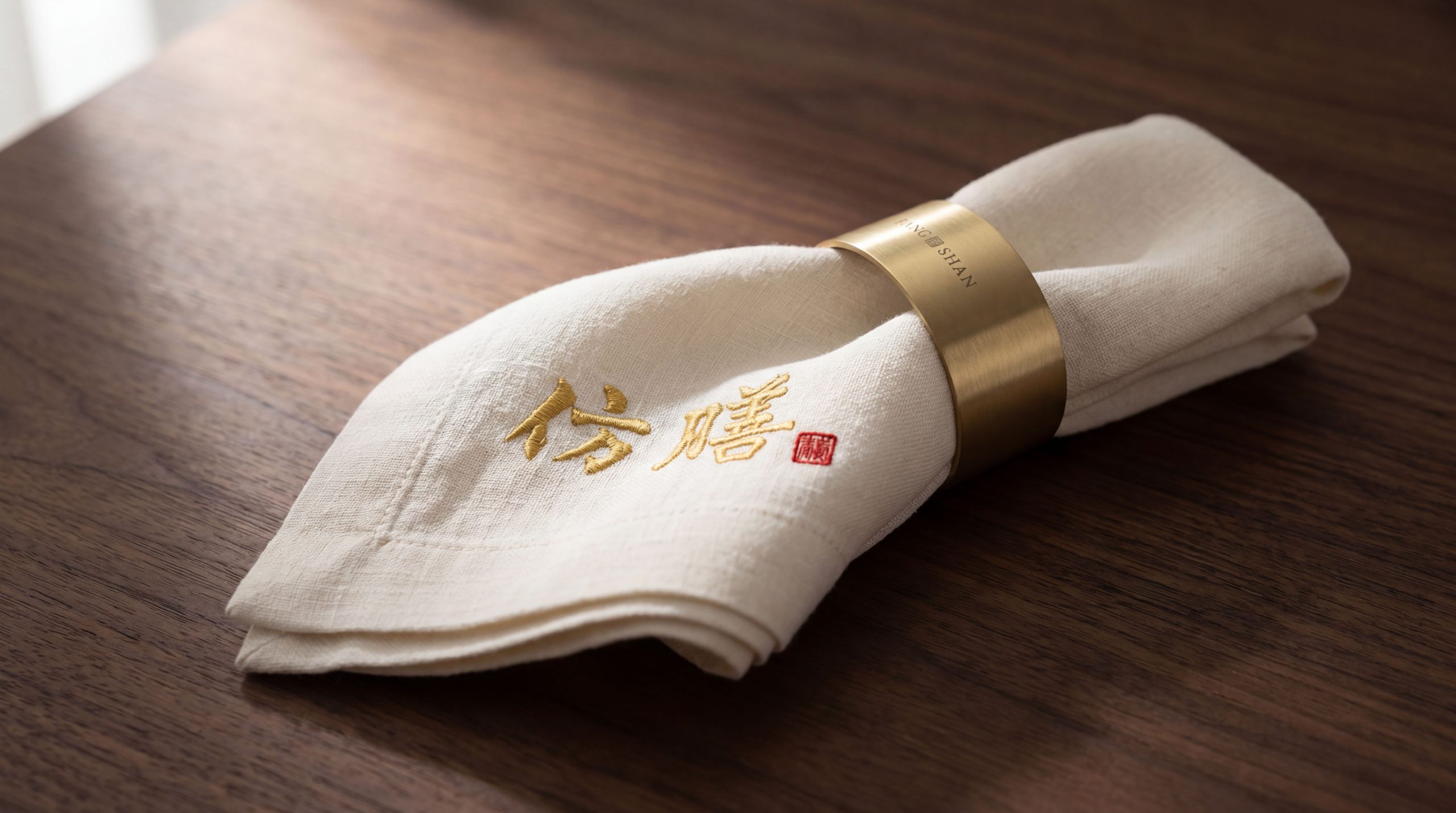
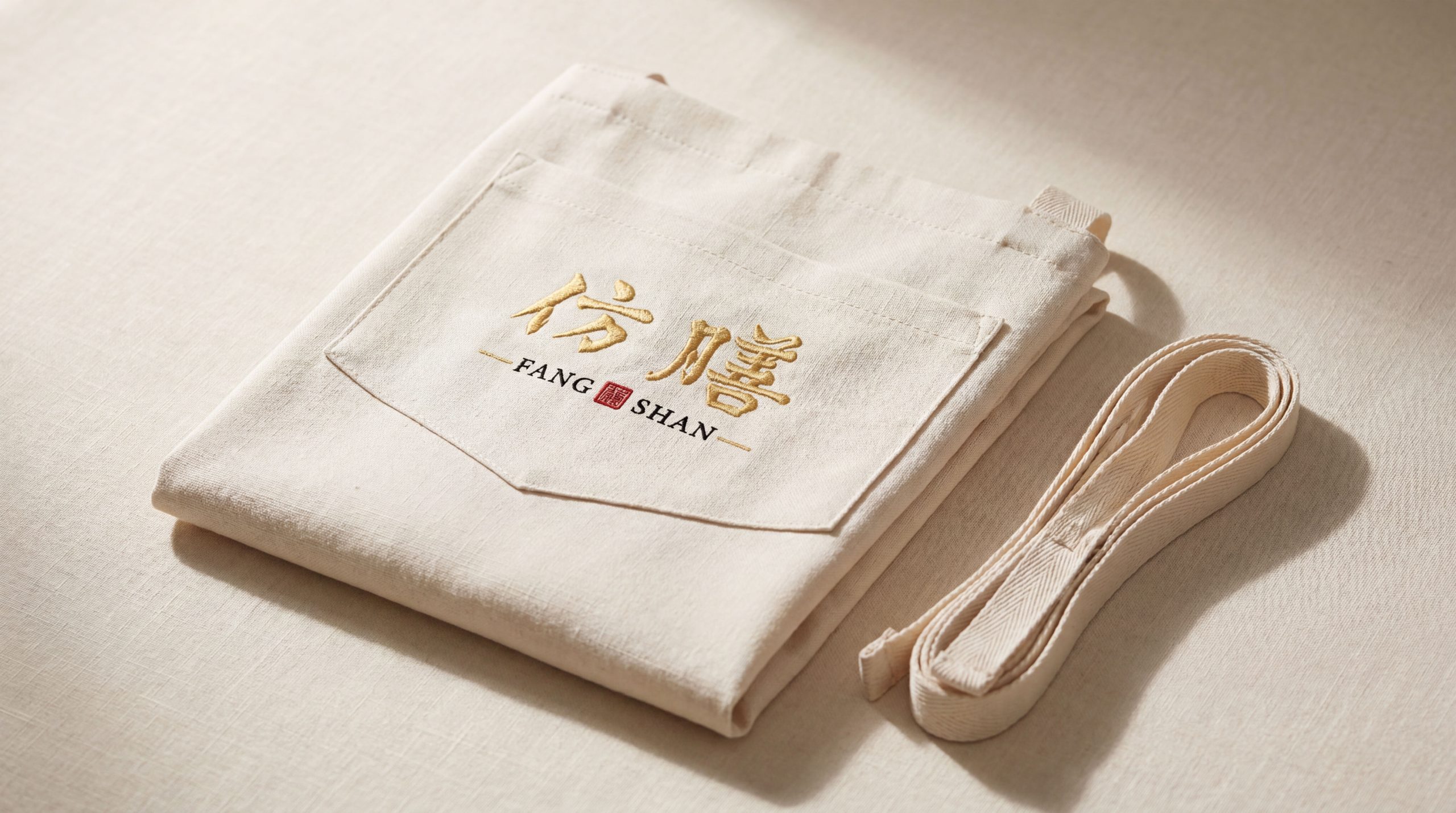
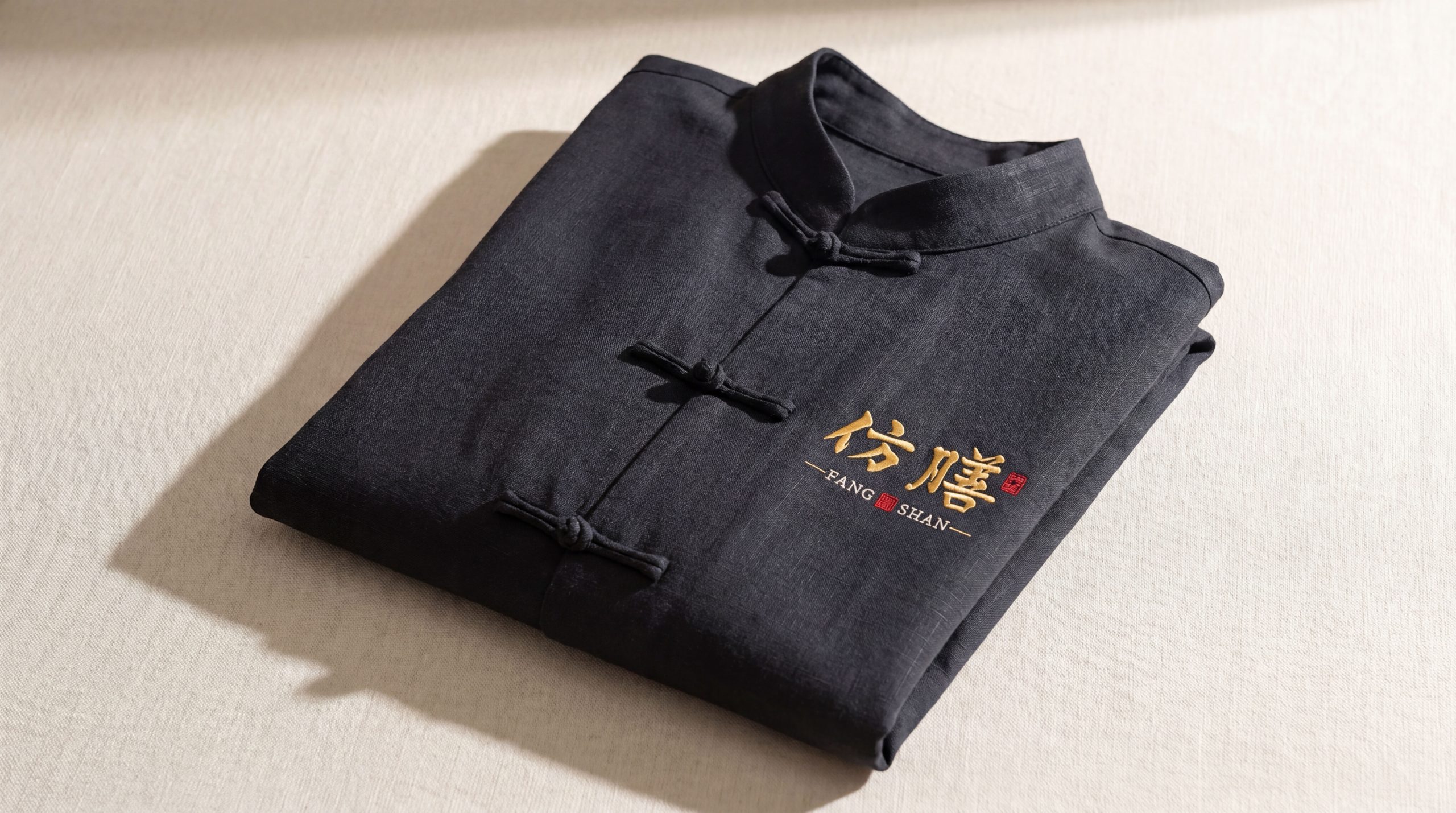
The logo has strong system scalability and can be widely used in restaurant front entrance plaques, lobby image walls, private room nameplates, screen decorations and palace-style guidance systems; menu covers, napkin buckles, porcelain tableware bases, chopstick sets, toothpick sets and other catering supplies; gift boxes Packaging, palace pastry souvenirs, royal meal albums and brand cultural publications; official website, reservation platform, social media image and food content marketing materials; image of state banquet reception, international food culture festival, Chinese food heritage exhibition and foreign affairs catering events. In the most ceremonial application scenario of porcelain tableware, the imperial dining yellow dragon emblem is fired on the bottom of each piece of tableware using the underglaze color process, just like the royal inscription on official kiln porcelain in the Qing Dynasty. Guests can inadvertently feel the imitation dining's ultimate restoration of palace etiquette when turning over the cups and saucers. In the dynamic vision, the coiled dragon can slowly emerge from the clouds and mist, and the dragon's body gradually spirals into shape in the golden light. The dragon's head finally faces the viewer, holding a pearl in its mouth, and its eyes are shining. Ruyi cloud patterns slowly flow around the dragon's body, symbolizing the glorious inheritance of century-old imitation dining from the imperial dining room of the Qing Dynasty to the contemporary state banquet hall. The dragon pattern, Ruyi moire pattern and continuous bead pattern can be extracted as visual mother elements respectively, and used in the ceiling caisson decoration, wall pattern, tablecloth texture and brand pattern system of the restaurant space.
The logo contains the three core images of the Fangshan Restaurant brand: Imperial Authenticity - the five-clawed dragon and the imperial yellow spot color directly declare the brand's supreme status as the only orthodox inheritor of imperial cuisine in the Qing Dynasty; Royal Prestige - the palace decoration, circular seal structure and imperial spot color convey Fangshan Restaurant's unparalleled royal character and sense of ritual in the catering industry; Century of Heritage) - the brand history of nearly a hundred years and the word mark in imperial regular script convey Fangshan's cultural persistence in passing on the skills of imperial cuisine from generation to generation and the fire will never be extinguished. The overall design conveys Fangshan Restaurant's brand vision of "imperial dining, royal style, and century-old Fangshan".
Improper Usage (Protection Specification)
Do not change the posture, direction of circling, or the number and shape of the five-clawed dragon's claws; do not modify the calligraphy glyphs, stroke structures, or the positional relationship of the word "Fangshan" in the dragon's body; do not change the hue, brightness, or saturation of the main color of the imperial meal yellow; do not replace the bright yellow with other non-royal colors; do not remove the Ruyi moiré and beaded patterns. It is forbidden to add modern gradients, strokes or visual effects inconsistent with the palace style to the logo; do not rotate, mirror the direction of the dragon head or separate the coiled dragon and the circular badge; keep the white space around the logo not less than 25% of the diameter of the circle; the minimum display width must not be less than 30mm.
design results
After the logo was released, the brand recognition and cultural influence of Fangshan Restaurant in the fields of palace catering and cultural heritage at home and abroad have been significantly improved. With its unique visual language that combines the complex beauty of palace decorative art and the refined order of modern brand logos, the "Imperial Dinner Golden Dragon Badge" has become the core identification symbol of the Fangshan Restaurant brand system. It is widely used in restaurant environment, catering services, cultural communication and international exchanges, demonstrating the brand vision of "Imperial Dinner handed down from generation to generation, royal style". The royal visual combination of royal meal yellow and coiled dragon pattern has established an irreplaceable brand recognition in the minds of guests at home and abroad - Fangshan is the only orthodox inheritance of palace royal cuisine in the contemporary era.